





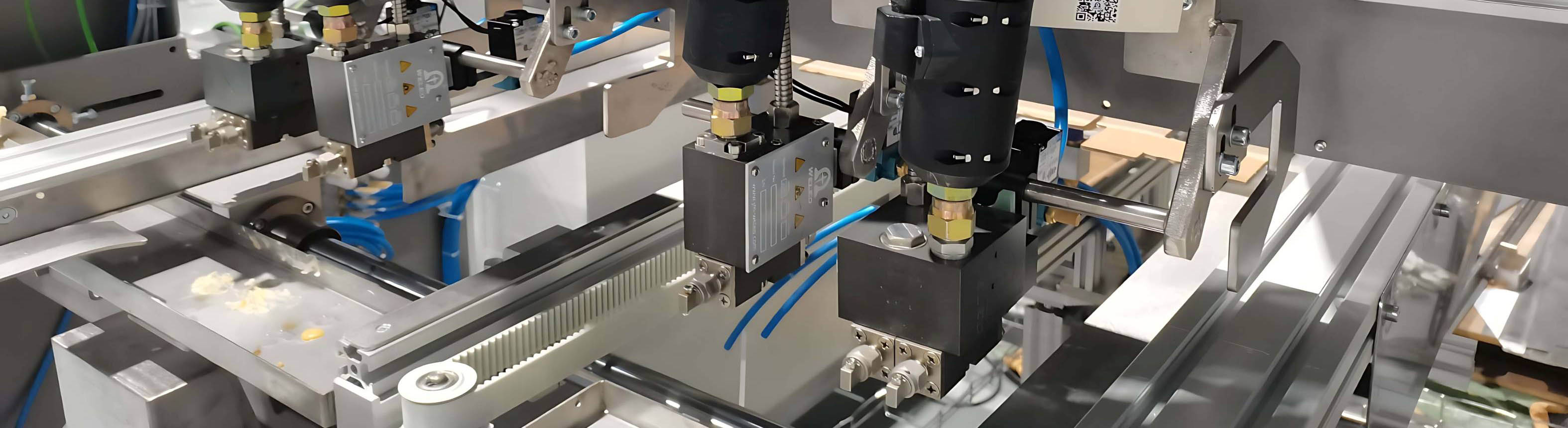
An adhesive metering system measures and controls the quantity delivered to a bead, spray, coating head, or filling point. Instead of relying only on supply pressure, it coordinates pump displacement, drive speed, temperature, timing, and line movement to keep deposited adhesive within a defined range.
-
2026-08-18
-
2026-08-18Hot melt adhesive is heated until fluid, applied in a controlled pattern, and develops handling strength as it cools. Cold glue is normally supplied as a liquid and forms a bond through water evaporation, absorption, chemical curing, or another non-melting mechanism. Their equipment, timing, substrates, and maintenance needs are therefore different.
-
2026-08-17Integration allows the adhesive equipment to exchange operating status, speed, trigger, recipe, and alarm signals with the production line. A successful connection coordinates glue delivery with machine motion while keeping temperature, pressure, and safety conditions under independent supervision.
-
2026-08-17Modularity means building an adhesive application system from coordinated functional units that can be configured, replaced, or expanded without redesigning the entire line. The modules may cover adhesive feeding, melting, pumping, heating, dosing, pattern control, hoses, guns, nozzles, sensors, and automation interfaces.
-
2026-08-14Continuous PUR processing requires stable melting, limited moisture exposure, controlled residence time, and enough delivery capacity for every operating speed. The correct melter must match the adhesive package, hourly consumption, viscosity, applicator demand, shutdown routine, and available factory utilities.
-
2026-08-14Gear pumps deliver adhesive through fixed displacement: each rotation moves a defined volume. When pump speed is controlled accurately and the adhesive remains stable, output can be coordinated with line speed more closely than systems that rely mainly on fluctuating air pressure.
-
2026-08-13Equipment compatibility depends on adhesive chemistry, supply form, viscosity, operating temperature, reactivity, required output, and application pattern. A melter that handles standard thermoplastic pellets may not be suitable for moisture-reactive PUR, pressure-sensitive material, or a high-viscosity compound.
-
2026-08-13The best system is the one that matches package material, adhesive type, production speed, closure design, and required glue pattern. Carton sealing, tray forming, case closing, label attachment, and paper-product assembly can require different pumps, guns, nozzles, and control methods.
-
2026-08-12Adhesive waste is not limited to visible overspray. Excess bead weight, unstable startup, tank residue, char, leaking modules, rejected bonds, and material left in long delivery paths all increase real consumption. Effective reduction begins by measuring where glue is lost.
-
2026-08-12Metered spraying should deliver a defined adhesive quantity while maintaining the required coverage, bond strength, and edge control at production speed. Selection begins with the material and target coat weight, then moves through pump displacement, pattern geometry, motion control, and line integration.
-
2026-08-12Ordering a melter requires more than selecting tank capacity and price. The equipment must melt the chosen adhesive fast enough, deliver it at the required rate, connect with the production line, and remain serviceable under actual operating conditions.
-
2026-08-11Clogging is usually the final symptom of contamination, degradation, cold spots, long residence time, or unsuitable filtration. Prevention must cover material loading through the nozzle, because clearing the outlet does not remove the cause.