





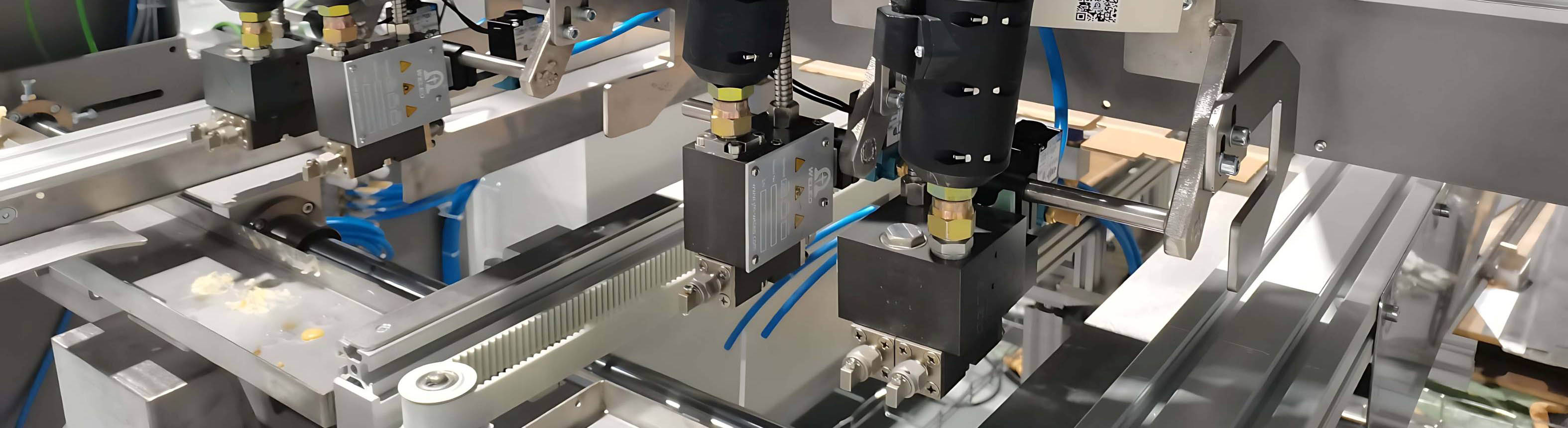
What Is An Adhesive Metering System?
An adhesive metering system measures and controls the quantity delivered to a bead, spray, coating head, or filling point. Instead of relying only on supply pressure, it coordinates pump displacement, drive speed, temperature, timing, and line movement to keep deposited adhesive within a defined range.
| Metering element | Function |
|---|---|
| Supply unit | Maintains material availability |
| Metering pump | Delivers a controlled volume |
| Motor or servo drive | Regulates pump rotation |
| Temperature control | Stabilizes viscosity for hot material |
| Applicator | Forms the required bead or coating |
| Controller | Links output with recipes and line speed |
| Sensors and alarms | Identify abnormal operating conditions |
Table of Contents
Why Pressure Alone Is Not Metering
Pressure is the force moving adhesive through the system. Flow is the quantity delivered over time. A pressure reading can remain similar while actual output changes because of viscosity, nozzle restriction, temperature, pump wear, or hose loss.
An adhesive metering control system therefore needs a predictable relationship between the command and delivered quantity. Gear pumps are frequently used because each revolution moves a defined theoretical volume, while servo control allows speed to change with production demand.
How the System Calculates Output
Required flow begins with the approved adhesive weight per product multiplied by products per minute. For continuous coating, it can be calculated from coat weight, coating width, substrate speed, and adhesive density.
The pump is then selected so minimum, normal, and maximum demand remain within a stable operating range. An oversized pump may lose resolution at very low speed, while an undersized unit may lack reserve capacity.
Connect Metering With Production Movement
A glue flow metering system can receive an encoder, analog reference, pulse signal, or communication value from the line. The controller adjusts pump speed as the conveyor accelerates, helping maintain glue weight per product.
Sensor position and applicator response must be coordinated with the pump command. Otherwise, the correct quantity may be deposited too early, too late, or outside the intended bonding area.
Stabilize the Material Before Measuring It
Viscosity variation changes pressure loss and applicator behavior. Hot melt systems require coordinated tank, hose, gun, and nozzle temperatures. Cold or reactive materials may need agitation, sealing, or other conditioning.
Filtration should capture contamination without restricting normal delivery. Air pockets, an empty pump inlet, leaking seals, or cured material can prevent a theoretically correct pump command from becoming accurate output.
Calibrate With Collected Adhesive
Understanding what is glue metering system operation requires physical verification. Collect adhesive for a defined time or number of cycles, weigh the sample, and compare it with the commanded amount. Repeat at low, normal, and high production speeds.
industrial dispensing control requires recalibration after warm-up, refill, filter service, or an adhesive change.
Define Acceptance Limits
Check average glue weight, sample variation, speed response, deposit position, temperature, pressure, and alarm behavior against approved limits.
Measurements should be recorded under actual production conditions rather than only during an idle equipment test. This reveals whether the complete system maintains output during acceleration, extended running, and material refilling.
WELEO develops each adhesive flow metering solution around the adhesive, required dosing range, pump displacement, applicator, and automation interface. This complete-path approach helps convert a controller command into measurable, repeatable adhesive application under actual production conditions.