





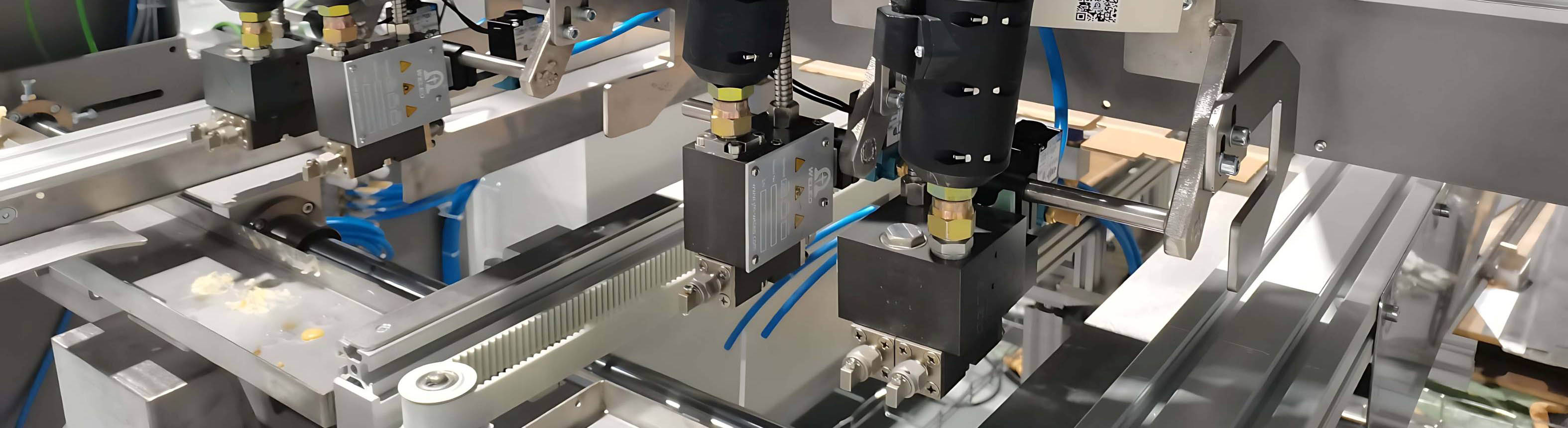
A low-maintenance system is designed to reduce unplanned service, simplify routine cleaning, make wear parts accessible, and prevent the operating conditions that create char, cured adhesive, blockage, leakage, or premature component failure. It still requires inspection and planned replacement of consumable parts.
-
2026-08-27
-
2026-08-26Mattress bonding involves large, flexible, and often porous materials that can move or compress during application. Equipment selection should reflect foam type, fabric, felt, spring-unit construction, adhesive open time, spray width, coat weight, production speed, and the required handling strength before the next assembly step.
-
2026-08-25Carton sealing equipment should match box structure, board quality, adhesive, line speed, flap geometry, compression time, and operating environment. Reliable sealing depends on the complete path from melting and pumping to bead placement and flap compression.
-
2026-08-25Labeling equipment must apply the correct adhesive quantity without wrinkling, staining, shifting, or damaging the label. Selection depends on label material, container surface, production speed, adhesive open time, deposit pattern, and the conditions the finished product will face.
-
2026-08-24A consistent spray pattern requires stable adhesive condition, measured flow, correct atomization, repeatable nozzle geometry, fixed mounting, and synchronized substrate movement. Adjusting only air pressure or nozzle height may improve appearance temporarily, but it rarely corrects variation caused elsewhere in the system.
-
2026-08-24Unstable pressure changes the amount, shape, and timing of adhesive leaving the applicator. It can produce thin or heavy beads, broken patterns, overspray, stringing, leakage, weak bonds, excess consumption, and faster wear of pumps, seals, filters, hoses, and valves.
-
2026-08-21A high-speed system applies the required adhesive quantity at the correct position while products move through short, repeated cycles. Performance depends on melt or supply capacity, pump response, valve switching, sensor accuracy, line-speed tracking, and the ability to recover between applications.
-
2026-08-21An industrial solution is a coordinated system that prepares, transfers, controls, and applies adhesive according to a defined production process. It may include material feeding, melting or conditioning, pumps, hoses, filters, applicators, nozzles, sensors, pattern control, automation signals, and maintenance access.
-
2026-08-20A smart control system coordinates adhesive heating, feeding, pumping, metering, pattern timing, alarms, recipes, and production-line signals while recording useful operating data. Its purpose is not merely remote access; it should make adhesive application more repeatable, diagnosable, and easier to manage across products and shifts.
-
2026-08-20A multi-nozzle system delivers adhesive through two or more outlets to create several beads, dots, spray zones, or coating tracks within one production cycle. The outlets may operate together, in groups, or independently depending on product geometry, line speed, pump capacity, and control requirements.
-
2026-08-19A continuous supply system keeps adhesive available to the application points throughout normal production without frequent manual interruption. It coordinates material storage, feeding, melting or conditioning, pumping, level monitoring, delivery, and replenishment so output remains stable during long shifts and changing line demand.
-
2026-08-19A high-precision coating system applies a controlled adhesive weight across a defined width, position, and pattern while keeping variation within an approved tolerance. Precision depends on the complete material path—from adhesive conditioning and metering to applicator geometry, substrate motion, and process verification.