





How to Ensure Uniform Adhesive Coating?
Consistent adhesive coverage depends on the full application path, not only the nozzle. Temperature, viscosity, pump delivery, line speed, applicator geometry, substrate condition, and trigger timing must remain coordinated. When one variable drifts, the coating may become thick, thin, streaked, broken, or misplaced.
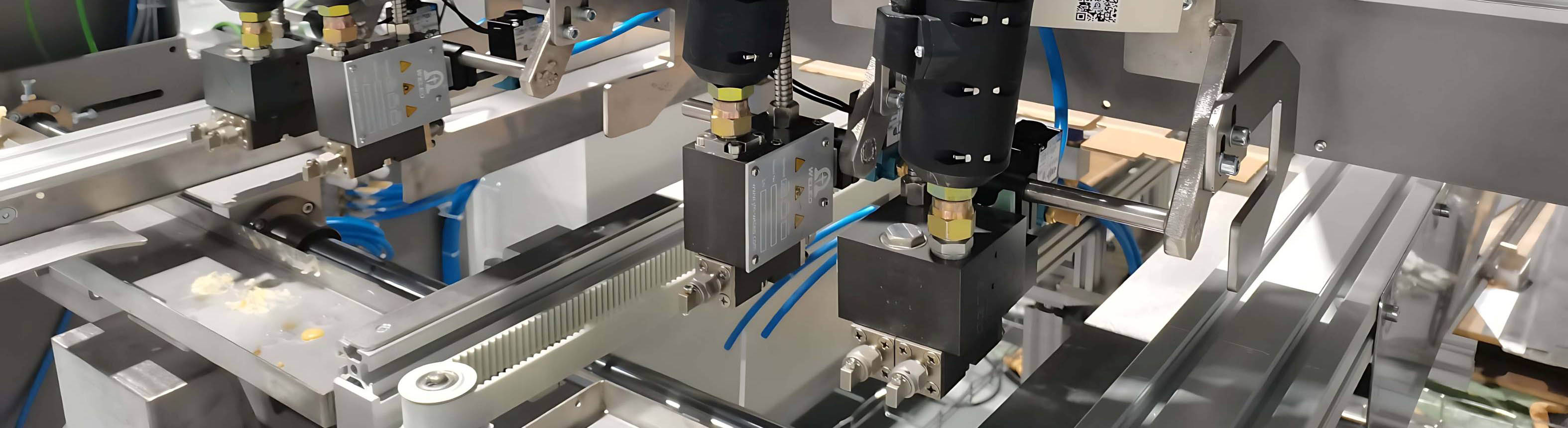
A uniform adhesive coating system should be configured around the adhesive and required output. WELEO supplies hot melt units, precision gear pump systems, PUR reactive hot melt equipment, cold glue systems, Heated Hoses, applicators, filters, and nozzles for different production conditions.
Table of Contents
Stabilize Adhesive Viscosity
Viscosity determines how easily adhesive can be pumped and spread. ASTM D1084 covers viscosity testing for free-flowing adhesives. Method B covers 0.05 to 200 Pa·s, equal to 50 to 200,000 cP, for Newtonian or near-Newtonian materials. This range shows why settings must be based on measured adhesive behavior at operating temperature.
Independent temperature control for the melter, hose, gun, and nozzle reduces cold spots and flow changes. Excessive heat can accelerate degradation, while insufficient heat increases resistance.
Match Output to Line Speed
Precision gear pumps suit controlled coating weight and continuous output. WELEO selects pump capacity according to viscosity, coating width, target coat weight, and maximum line speed.
Required adhesive output = coating width × line speed × target coat weight
At 120 m/min, material travels 2 m per second. A trigger delay of 10 milliseconds can shift glue position by about 20 mm. Encoder feedback and PLC synchronization are therefore important in a high-speed glue spreading control system.
Control Critical Variables
| Control Point | Production Check | Purpose |
|---|---|---|
| Temperature | Tank, hose, gun, nozzle | Stabilize viscosity |
| Pump output | Delivery per revolution | Control coat weight |
| Applicator gap | Clearance across width | Reduce variation |
| Filter and nozzle | Blockage and wear | Prevent streaks |
During the industrial coating process, operators should record adhesive batch, substrate batch, temperature, pump speed, line speed, coating width, coat weight, and inspection results. Actual readings are more useful than setpoints alone.
Verify Coverage and Coat Weight Separately
Visual coverage does not prove that the correct adhesive amount has been applied. The In-Mold Decorating Association defines adhesive uniformity as coverage across all designated substrate areas and separates this test from applied coating weight.
Its guideline recommends a 10 to 30 power magnifier for suitable paper and film samples. UV black light may also be used when an optical brightener is present.
To ensure even adhesive coating, take samples from the left, center, and right sides of the web. Compare coat weight, appearance, bond performance, and uncoated areas. Acceptance limits should come from product validation, adhesive data, substrate behavior, and final performance requirements.
Maintain Long-Run Stability
Filters load, nozzles collect residue, seals wear, and adhesive may degrade during prolonged heating. Maintenance should cover filter replacement, nozzle cleaning, hose temperature checks, pressure monitoring, pump inspection, and signal calibration.
WELEO supports adhesive coating consistency control through complete system matching. Precision gear pump melters, quantitative spraying equipment, PUR units, cold glue systems, heated hoses, applicators, and nozzle options can be integrated around the required pattern and speed.
Uniform coating comes from measured viscosity, stable heating, accurate metering, synchronized movement, documented inspection, and disciplined ma