





Why Does Adhesive System Compatibility Matter?
Modern production lines require adhesive to reach the correct area at the correct time and in a repeatable quantity. An automatic glue spray system prepares the adhesive, delivers it under controlled pressure, forms a defined pattern, and activates the applicator through signals from the production machine.
Table of Contents
Main System Structure
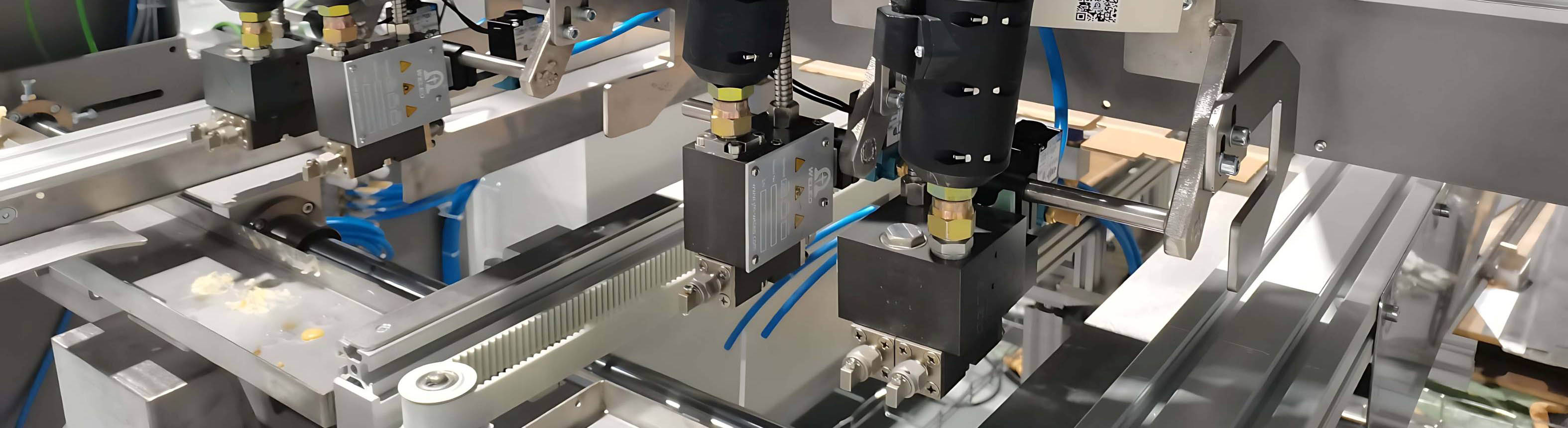
Understanding what is glue spray system requires looking beyond the spray gun. A typical setup includes an adhesive supply unit, pump, hose, filter, applicator, nozzle, air control, sensor, and controller.
For hot melt production, solid adhesive is heated to a stable processing condition. The pump transfers it through a Heated Hose so viscosity remains consistent. Controlled air then shapes the adhesive into a swirl, fiber, mist, or another required pattern. Cold glue equipment removes the melting stage but still relies on stable pressure, flow, and timing.
How the Spraying Cycle Works
A sensor detects the product, or an encoder reads line movement. The controller determines when the gun opens, how long it sprays, and when it closes. Pump speed controls adhesive quantity, while air pressure and nozzle geometry influence pattern width.
At 120 metres per minute, a substrate moves 2 metres each second. A delay of 15 milliseconds can shift the adhesive position by about 30 millimetres. Fast packaging, labeling, nonwoven, converting, and assembly lines therefore need synchronized control instead of manual adjustment.
The adhesive spray application system must coordinate temperature, pump output, process air, line speed, and trigger signals. Correct coordination reduces overspray, missed areas, unstable edges, and pattern changes.
| Component | Main Role | Selection Focus |
|---|---|---|
| Supply unit | Prepares adhesive | Capacity |
| Pump | Meters output | Flow stability |
| Hose and filter | Transfers material | Heat control |
| Gun and nozzle | Forms the pattern | Width and cut-off |
| Controller | Times spraying | Line integration |
Efficiency and Process Data
Only adhesive reaching the intended surface creates bonding value. Overspray raises consumption and contaminates nearby parts.
The United States Environmental Protection Agency reports in its Control Techniques Guidelines for Miscellaneous Industrial Adhesives that electrostatic adhesive spraying can achieve transfer efficiency of up to 90 percent. High-volume low-pressure spraying may reach up to 65 percent under suitable conditions. These values apply to defined liquid adhesive processes, but they show how equipment type, airflow, workpiece shape, and setup affect material use. (US EPA)
Selecting Suitable Equipment
Choosing industrial spray glue equipment requires more than comparing tank size. Buyers should confirm adhesive type, viscosity, operating temperature, coating width, line speed, pattern, gun quantity, duty cycle, substrate, and control signals.
precision gear pump systems suit applications where output must follow line speed closely. Piston pump units support general spraying duties. PUR reactive adhesive requires equipment designed to reduce moisture exposure. Nozzle selection must match the target area because a wide web and a narrow carton flap require different spray structures.
WELEO System Advantages
WELEO develops Hot Melt Adhesive Supply Units, precision gear pump melters, piston pump units, PUR reactive hot melt equipment, quantitative spraying systems, cold gluing systems, heated hoses, applicators, filters, and nozzle solutions. This range allows an automated glue spraying solution to be configured around actual production requirements.
WELEO can evaluate adhesive properties, output demand, machine speed, hose length, gun quantity, and spray width before selection. Matching these elements improves delivery stability, pattern repeatability, and line integration.
Automatic glue spraying turns adhesive application into a controlled manufacturing step. Stable preparation, accurate metering, synchronized triggering, suitable nozzle design, and planned maintenance support reliable output.