





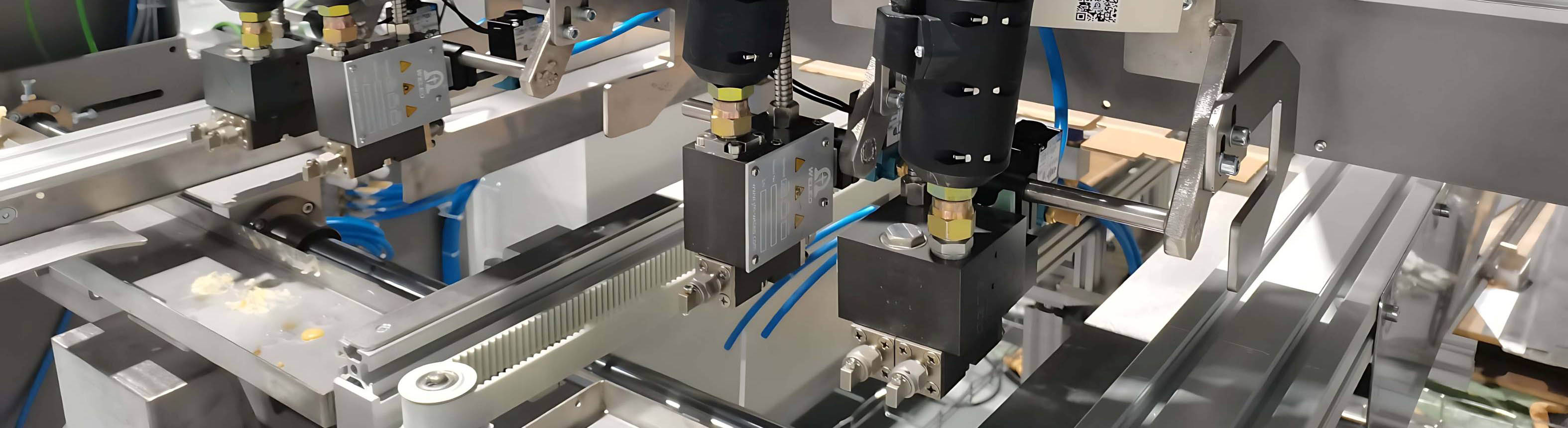
Temperature determines how readily adhesive flows, how accurately it can be pumped, and how it behaves on the substrate. Heat variation between the tank, hose, and applicator changes viscosity, leading to unstable bead size, poor cut-off, weak wetting, stringing, or excess consumption.
-
2026-08-11
-
2026-08-11Heated hose selection should begin with the adhesive, required flow, operating temperature, routing distance, and applicator connection. It keeps viscosity consistent from melter to gun, limits pressure loss, and supports repeatable adhesive patterns.
-
2026-06-19Precise adhesive pressure control is essential for stable glue amount, clean cut-off, repeatable coating, and long equipment life. Pressure that is too low may create skipped lines, narrow coating, or weak bonding. Pressure that is too high may cause splash, stringing, leakage, excessive glue use, and faster seal wear.
-
2026-06-18Glue system lifespan improves when heating, filtration, pressure, adhesive feeding, shutdown habits, and maintenance records are managed consistently. Many adhesive systems do not fail suddenly. Their performance drops slowly through carbonized adhesive, worn seals, clogged filters, unstable hoses, poor temperature balance, and repeated emergency adjustments.
-
2026-06-17Modern production lines require adhesive to reach the correct area at the correct time and in a repeatable quantity. An automatic glue spray system prepares the adhesive, delivers it under controlled pressure, forms a defined pattern, and activates the applicator through signals from the production machine.
-
2026-06-16Consistent adhesive coverage depends on the full application path, not only the nozzle. Temperature, viscosity, pump delivery, line speed, applicator geometry, substrate condition, and trigger timing must remain coordinated. When one variable drifts, the coating may become thick, thin, streaked, broken, or misplaced.
-
2026-06-15Stable glue lines are not created by one single machine part. They come from the combined control of adhesive temperature, pump output, hose heating, nozzle condition, trigger timing, substrate movement, and operator settings. When one of these variables changes during production, an inconsistent glue line problem appears quickly: the line becomes thick, thin, broken, shifted, or stringy.
-
2026-06-12PUR reactive hot melt adhesive system is equipment designed for melting, delivering, and applying polyurethane reactive hot melt adhesive. Unlike ordinary thermoplastic hot melt glue, PUR adhesive reacts with moisture after application and forms stronger chemical bonding over time.
-
2026-06-11Pump selection has a direct impact on hot melt adhesive output, bonding quality, maintenance cost, and long-term production stability. Many factories compare tank size and price first, but the pump structure inside the hot melt melter often decides whether the equipment can match the real production process.
-
2026-06-10Accurate glue dispensing is one of the key factors behind stable bonding quality in automated production lines. When the glue amount changes, products may face weak bonding, glue overflow, uneven coating, dirty edges, or higher rejection rates.
-
2026-06-09Hot melt bonding technology is widely used in modern manufacturing because it enables fast curing, clean application, and strong adhesion across multiple substrates. A complete system is designed to melt solid adhesive, maintain stable temperature, transport material through heated pathways, and apply it in a controlled pattern onto moving or stationary products.
-
2026-06-08Stable production depends on more than adhesive quality. The hot melt adhesive system must match the glue type, production speed, application method, and working environment. When the system is too small, glue supply becomes unstable.