





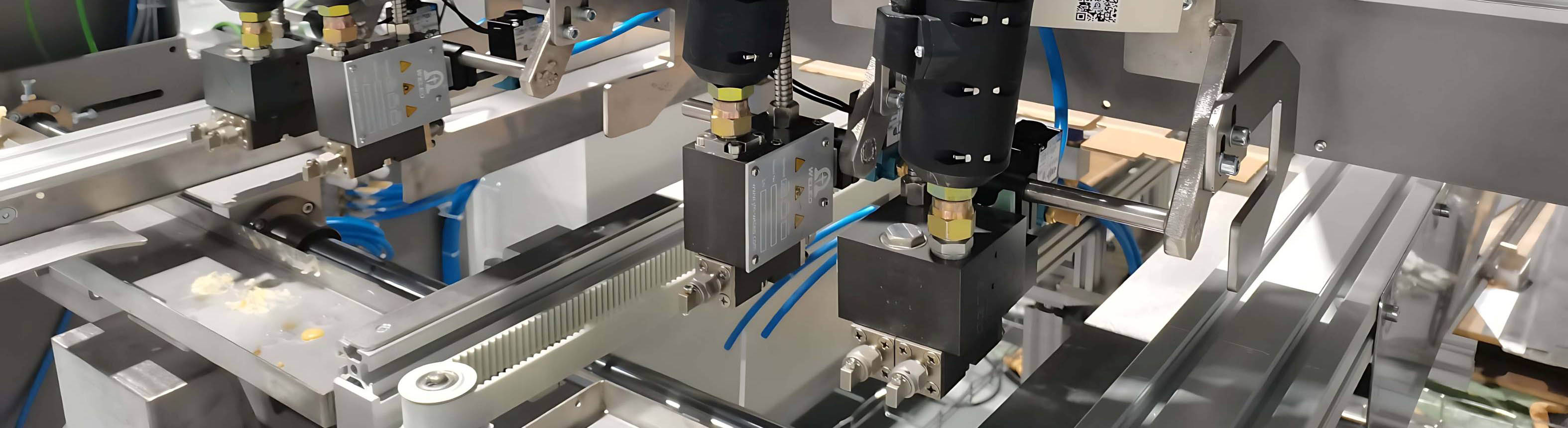
What Is A Hot Melt Adhesive Application Equipment Used For?
Hot melt bonding technology is widely used in modern manufacturing because it enables fast curing, clean application, and strong adhesion across multiple substrates. A complete system is designed to melt solid adhesive, maintain stable temperature, transport material through heated pathways, and apply it in a controlled pattern onto moving or stationary products.
Table of Contents
Core Function in Production Lines
A hot melt adhesive application equipment is used to transform solid adhesive into a precisely controlled liquid state and deliver it onto target surfaces with stable volume and timing. The purpose is not only bonding but also ensuring repeatable coating quality across long production cycles.
In packaging, woodworking, hygiene products, electronics assembly, and filtration manufacturing, bonding quality directly depends on how evenly adhesive is applied and how fast the line can operate without interruption.
System Composition and Working Logic
A typical system includes a melting tank, temperature control unit, pump module, Heated Hose, filter assembly, and application head. Each component plays a role in maintaining stability from melting to dispensing.
The melting stage ensures consistent fluidity. The pump defines output volume. The hose maintains thermal balance. The applicator determines final pattern shape and coverage width. When any component deviates, coating consistency is affected immediately.
A hot melt glue dispensing system relies on synchronization between temperature, pressure, and line speed. Modern systems often integrate sensors and PLC control to adjust flow in real time, reducing manual intervention and improving repeatability.
Industrial Application Scenarios
Different industries require different coating behaviors, from narrow bead lines to wide spray patterns or precise dot dispensing.
Common use cases include carton sealing in packaging lines, edge banding in furniture production, lamination of hygiene materials, assembly bonding in electronic modules, and structural fixation in automotive interior parts.
Each scenario requires careful selection of viscosity range, pump capacity, nozzle geometry, and control logic. Even small mismatches can lead to stringing, overflow, weak bonding, or uneven coverage.
Process Stability and Key Engineering Parameters
Performance in adhesive application depends on several technical variables that must remain stable throughout production cycles.
Temperature consistency ensures stable viscosity. Pump precision determines volume repeatability. Pressure balance affects spray or bead formation. Nozzle design controls final pattern shape. Line speed synchronization ensures correct placement.
Industrial data from packaging automation studies shows that a temperature fluctuation of more than five degrees Celsius can cause adhesive viscosity variation above fifteen percent, directly affecting bonding strength and coating uniformity.
Efficiency and Material Utilization
Material efficiency is a critical factor in large scale production. Studies from industrial coating systems indicate that optimized spray or bead control can reduce adhesive waste by up to thirty percent compared to uncontrolled manual application.
Automation also reduces downtime caused by manual adjustment and improves cycle consistency across multi shift production environments.
Comparison of Application Methods
| Method Type | Control Level | Typical Use | Key Advantage |
|---|---|---|---|
| Manual application | Low | Small scale repair | Flexible operation |
| Semi automatic system | Medium | Medium batch production | Improved consistency |
| Fully automated system | High | Continuous industrial lines | Stable output and precision |
In fully automated environments, integration with sensors and motion controllers ensures that adhesive is applied exactly when and where it is required.
Industrial Equipment Integration
Modern production requires coordination between dispensing units and the entire line system. Conveyor speed, product spacing, trigger timing, and adhesive flow must operate as one synchronized process.
An adhesive equipment for industrial lines must therefore support flexible configuration, including multiple guns, adjustable pressure zones, and programmable output profiles. This allows manufacturers to adapt quickly to different product sizes and production requirements without changing hardware.
WELEO System Capability
WELEO designs and manufactures complete adhesive supply and application systems including melting units, gear pump modules, piston pump solutions, PUR systems, cold glue units, heated hoses, filters, applicators, and nozzle assemblies.
By combining stable thermal control with precise metering technology, WELEO systems support continuous production environments where accuracy, speed, and repeatability are critical. Each configuration is matched according to adhesive type, line speed, coating width, and process requirement.
Industrial bonding is no longer a standalone step but an integrated process controlled through automation, measurement, and stable mechanical delivery.