





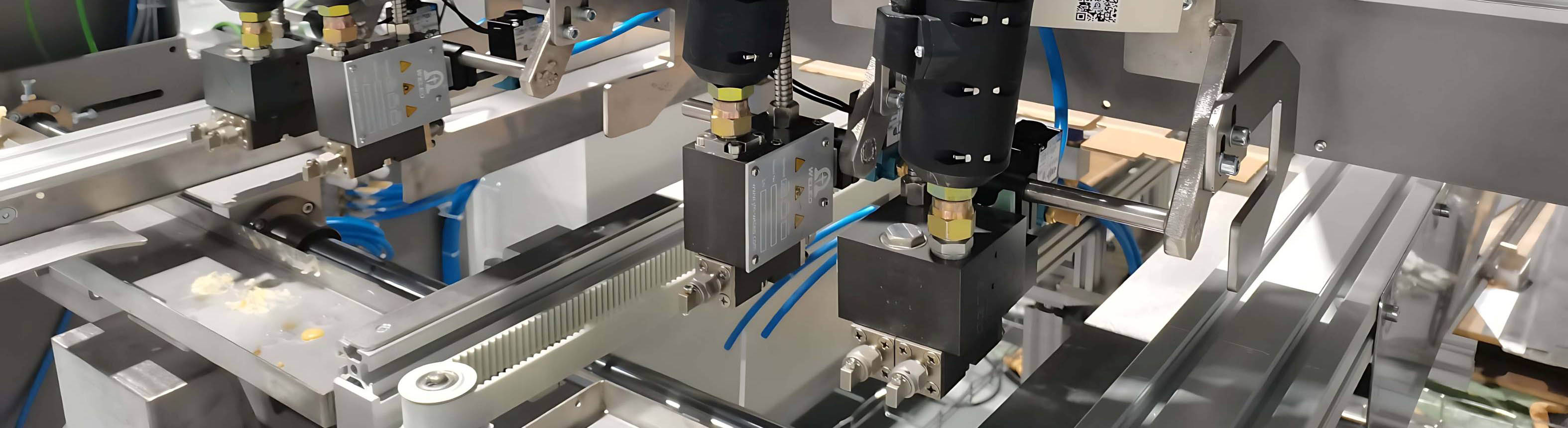
What Is A Customizable Adhesive System Solution?
A customizable solution adapts adhesive feeding, conditioning, pumping, dosing, application, control, and installation to a defined production task. Customization may change capacity, number of channels, connectors, mounting, software, heating zones, patterns, or communication interfaces while retaining proven system functions.
Table of Contents
Customization Should Begin With a Process Gap
Standard equipment should be used where it meets the requirement. Engineering changes become valuable when adhesive packaging, flow range, machine space, product geometry, automation protocol, or application pattern cannot be supported reliably by a standard configuration.
A custom adhesive system solution should solve a measurable gap such as insufficient melt rate, restricted installation space, multiple independent lanes, moving applicators, unusual supply containers, or recipe-controlled coating widths.
Define What Can and Cannot Change
Mechanical changes may include tank size, platen dimensions, hose length, manifold routing, nozzle angle, or mounting frame. Electrical options can cover voltage, sensor type, connectors, heating power, motors, and panel layout.
Adhesive chemistry, safe temperature limits, component ratings, and required guarding remain engineering constraints. Customization should not move a component outside its validated pressure, temperature, or electrical range.
Provide Complete Production Inputs
Useful oem adhesive system design data includes:
Adhesive technical data and supply format
Average and peak consumption
Product drawings and bond locations
Deposit weight, width, and tolerance
Normal and maximum line speed
Number of pumps, hoses, guns, and lanes
Available power, air, and installation space
PLC signals and communication method
Cleaning, shutdown, and changeover requirements
Missing process information often causes more risk than the requested hardware change.
Compare Customization With Validation
| Requested change | Validation requirement |
|---|---|
| Different pump size | Output test across full flow range |
| Added heating zones | Warm-up and recovery verification |
| Special nozzle or pattern | Sample coating and bond test |
| New PLC interface | Signal and fail-safe testing |
| Compact frame | Heat, access, and service review |
| Multiple channels | Individual output calibration |
Build the System From Compatible Modules
Custom does not have to mean entirely new. Melters, gear dosing platforms, Heated Hoses, applicators, nozzles, sensors, and controllers can be combined around the process while keeping documented interfaces.
This modular approach reduces technical risk and simplifies spare parts. customized glue equipment should still use standardized service items where possible, especially filters, seals, heaters, sensors, and connectors.
Confirm Acceptance Before Manufacturing
Custom adhesive system design needs measurable approval criteria. Define output range, temperature stability, pattern dimensions, timing accuracy, alarm response, installation size, and required production tests.
Factory testing may verify equipment functions, but final results also depend on the real substrate, adhesive, line movement, and environmental conditions. Samples and line data should be provided early.
WELEO develops each OEM glue system solution around verified process requirements rather than cosmetic variation. Clear design boundaries, interface records, and acceptance tests allow customization to improve production fit without making maintenance, spare parts, or future expansion unnecessarily complex.