





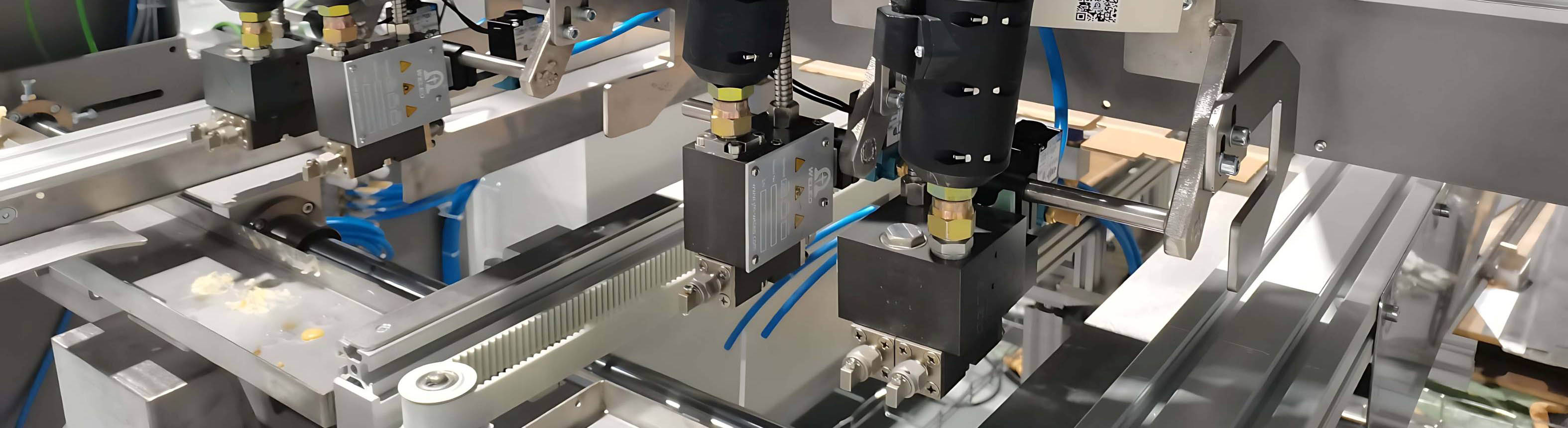
What Is An Integrated Adhesive Production System?
An integrated system connects adhesive supply, melting or conditioning, pumping, filtration, dosing, application, line control, alarms, and maintenance information into one coordinated production process. Integration defines how these functions exchange material, signals, readiness status, and fault responses.
Table of Contents
Integration Begins With Process Ownership
Every action needs an owner. The adhesive controller may manage heating and pump protection, while the main PLC controls product movement. A robot or pattern controller may own application position. Unclear ownership creates duplicate commands and difficult troubleshooting.
The sequence should cover warm-up, material readiness, production start, speed changes, planned pauses, refilling, faults, emergency stop, and restart after power recovery.
Connect Material Flow Before Data Flow
The supply unit, pump, hoses, filters, applicators, and nozzles must share compatible capacity. Software cannot correct an undersized melt rate, restricted filter, excessive hose loss, or applicator demand beyond pump output.
An integrated glue production system should be sized from peak simultaneous use. Adhesive format, viscosity, temperature, residence time, and cleaning procedure affect every downstream component.
Coordinate Signals With Machine Motion
Product sensors, encoders, trigger signals, and pump-speed references connect adhesive delivery to production movement. Readiness signals should prevent the line from feeding products before temperature, pressure, material level, and applicator status are acceptable.
industrial adhesive integration also requires defined fail-safe behavior. Loss of communication should close applicators, stop delivery, or hold production according to the validated safety sequence.
Use Shared Recipes Carefully
Recipes may store temperatures, pump speeds, active channels, pattern positions, and alarm limits. A product change should load a complete approved group of settings rather than relying on separate manual adjustments.
Recipe changes should be tested at low, normal, and maximum production speed. Correct digital settings still require verification through deposited weight, position, pattern quality, and bond results.
Verify Interfaces as One System
Individual machines may pass separate factory tests yet fail after connection. Integration testing should include material flow, electrical signals, communication timing, mechanical mounting, service clearance, and production response.
| Integration point | Acceptance question |
|---|---|
| Material supply | Can replenishment support peak use? |
| Thermal control | Do all zones recover under load? |
| Pump and applicator | Is output stable across the speed range? |
| PLC interface | Are ready, run, trigger, and fault signals correct? |
| Recipe control | Are approved settings loaded together? |
| Safety response | Does each fault produce the intended state? |
| Maintenance access | Can service occur after installation? |
Document the Full Line
A full line glue system solution should include layouts, utility requirements, I/O lists, signal ownership, recipes, alarm logic, spare parts, and shutdown procedures.
These records support operator training, fault diagnosis, and future expansion. Revised documents should be issued whenever a lane, applicator, recipe, or communication interface changes.
WELEO develops each adhesive system integration solution around the adhesive, product, peak output, application pattern, automation platform, and available space. The integrated adhesive production system is validated as a connected process so material delivery, line movement, controls, and maintenance support the same production objective.