





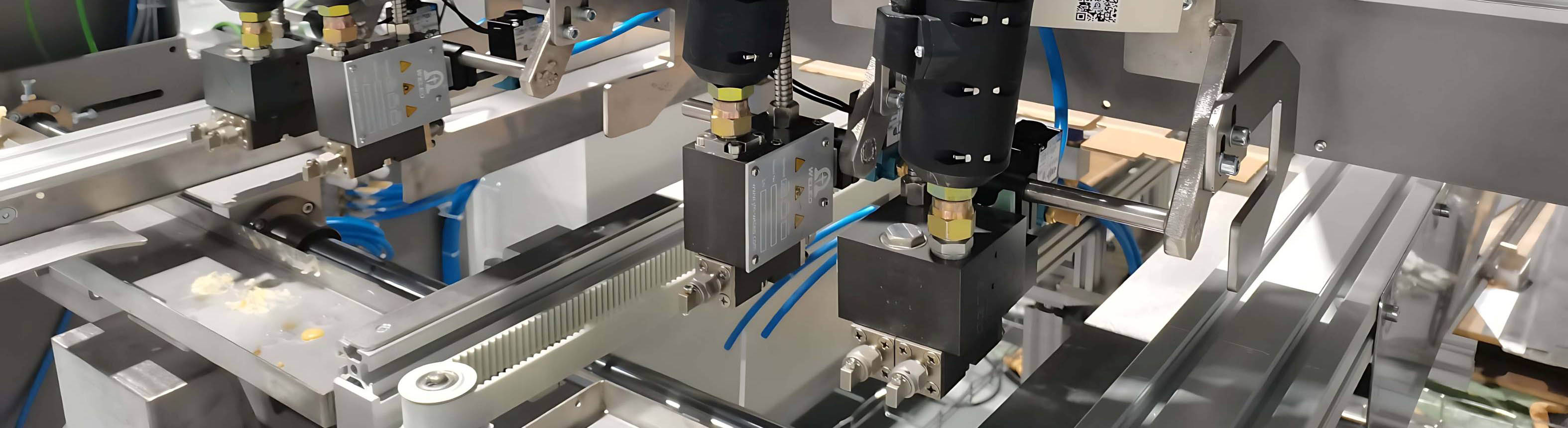
What Problems Can Poor Glue Pressure Stability Cause?
Unstable pressure changes the amount, shape, and timing of adhesive leaving the applicator. It can produce thin or heavy beads, broken patterns, overspray, stringing, leakage, weak bonds, excess consumption, and faster wear of pumps, seals, filters, hoses, and valves.
Table of Contents
Pressure Variation Changes Glue Output
Pressure provides the force needed to move adhesive through filters, hoses, guns, and nozzles. When it falls, flow may become insufficient for the required bead or coating. When it rises excessively, adhesive may splash, leak, or continue flowing after the valve closes.
glue pressure stability control is especially important when one supply unit feeds several applicators. A change at one outlet can influence the remaining channels if pump capacity, manifolds, or individual control are not designed correctly.
Product Defects Often Appear First
Poor pressure stability can create:
Narrow, interrupted, or missing beads
Excess adhesive and squeeze-out
Uneven spray or coating width
Delayed bead start and poor cut-off
Stringing between products
Different output between nozzles
Variable bond strength
Higher reject and cleaning rates
Pressure should therefore be reviewed with actual deposit weight and pattern quality. A reading may remain within a broad machine limit while still producing unacceptable variation at the product.
Locate the Source of the Instability
| Pressure behavior | Possible cause | Verification |
|---|---|---|
| Pressure falls at high speed | Pump or melt capacity too low | Compare demand with rated output |
| Pressure rises gradually | Filter or nozzle restriction | Inspect pressure trend and filters |
| Pressure pulses repeatedly | Pump cycle or air supply variation | Compare pulse timing with pump |
| One channel differs | Unequal hose or nozzle restriction | Test outlets separately |
| Pressure changes after refill | Temperature and viscosity recovery | Review zone temperature |
| Pressure drops while idle | Leakage or valve bypass | Isolate sections and inspect seals |
A hot melt pump pressure system should be evaluated under actual flow. A stable reading with all guns closed does not confirm that pressure will remain controlled during simultaneous dispensing.
Temperature and Pressure Must Be Read Together
Cold adhesive is more viscous and needs greater force to move through the same path. A cold hose, gun, filter, or nozzle can therefore create high pressure even when the melter display appears normal.
Excessive heat lowers viscosity and may reduce pressure while increasing flow. Operators who correct every pressure change through temperature adjustments can move the adhesive outside its approved process range.
Check Filtration and Delivery Restrictions
Contamination, char, cured material, or an incorrectly selected filter mesh can restrict the delivery path. Long hoses, small internal diameters, sharp bends, and undersized nozzles also increase pressure loss.
Filters and nozzles should be inspected according to pressure trends and production history. Waiting for complete blockage can create sudden downtime and push contamination into downstream components.
Establish Stable Production Limits
stable glue pressure for production should be defined as an approved operating range under normal flow, not one fixed number. Record pressure, temperature, line speed, pump command, glue weight, and pattern quality during acceptance testing.
The approved range should be verified during startup, full-speed production, simultaneous gun operation, material refilling, and planned stops. These conditions reveal pressure changes that an idle test cannot detect.
WELEO reviews the complete adhesive path when pressure becomes unstable. Matching pump capacity, heating, filtration, hose sizing, applicator demand, and control response helps remove the underlying cause instead of repeatedly changing one pressure setting.