





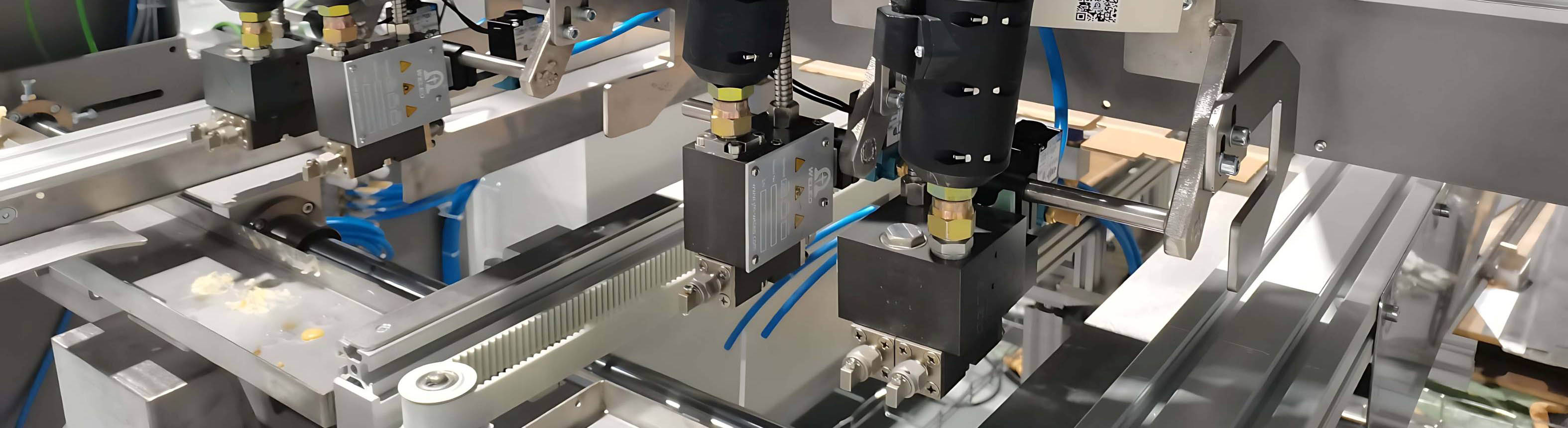
What Is The Role Of Temperature Control In Glue Systems?
Stable temperature control is one of the most important factors in a glue system. It affects adhesive viscosity, flow speed, pump pressure, nozzle condition, open time, bonding strength, and maintenance frequency. When temperature control is poor, factories may see overflow, stringing, weak bonding, carbon buildup, or frequent nozzle clogging.
Table of Contents
- Glue Temperature Regulation Starts Before Application
- Why Temperature Affects Viscosity
- Temperature Control Protects Adhesive Quality
- Temperature Recovery Matters At High Speed
- Practical Temperature Control Review
- Temperature And Pressure Work Together
- How WELEO Supports Temperature Control
- Temperature Control Makes Glue Systems Predictable
Glue Temperature Regulation Starts Before Application
The adhesive does not only need heat at the tank. It needs stable temperature through the full path.
Melting zone
Pump area
Filter area
Heated Hose
Applicator body
Nozzle outlet
Each area affects the adhesive before it reaches the product. If the tank temperature is correct but the hose loses heat, viscosity rises during transfer. If the nozzle is overheated, the glue may spread too much after application.
A hot melt heating control system should keep the adhesive in a stable working condition from melting to dispensing.
Why Temperature Affects Viscosity
Hot melt adhesive viscosity decreases when temperature increases and rises when temperature drops. This is a basic material behavior confirmed through common viscosity testing methods such as ASTM D3236.
When viscosity changes, pump output also changes. The same pressure may produce more glue at high temperature and less glue at low temperature. This is why temperature control glue system design directly affects dispensing accuracy.
High viscosity may cause:
Broken glue lines
Poor wetting
High pump load
Slow output
Weak bonding at fast speed
Low viscosity may cause:
Glue overflow
Excessive spreading
Stringing
Material penetration
Dirty product edges
Temperature Control Protects Adhesive Quality
Adhesive should not be heated more than necessary. Long high-temperature holding can cause thermal degradation. In hot melt systems, degraded adhesive may darken, smell burnt, form carbon particles, and block filters or nozzles.
This problem often happens when the line stops for a long time but the tank remains at high temperature. It can also happen when operators increase temperature to solve flow problems without checking pump, filter, or hose conditions.
Good temperature management reduces carbonization risk and helps maintain adhesive quality during long shifts.
Temperature Recovery Matters At High Speed
A glue system may work well during trial testing but become unstable during full-speed production. One reason is weak temperature recovery.
When adhesive consumption increases, the system must melt and heat new adhesive quickly enough. If recovery is poor, glue temperature drops and viscosity rises. The result may be skipped glue, thin output, or unstable bonding.
This is especially important for packaging, labeling, non-woven products, and other high-output applications. Equipment selection should consider glue consumption per hour and production speed, not only tank volume.
Practical Temperature Control Review
| Review Point | What To Check | Production Impact |
|---|---|---|
| Tank setting | Adhesive melting condition | Prevents poor melting or overheating |
| Hose heating | Temperature during transfer | Keeps flow stable |
| Applicator heating | Valve and manifold stability | Improves response |
| Nozzle temperature | Final outlet behavior | Controls stringing and spreading |
| Standby mode | Temperature during pauses | Reduces carbon buildup |
A practical review should compare set temperature with actual production behavior. The best temperature is not always the highest one. It is the range that gives clean output, stable bonding, and manageable maintenance.
Temperature And Pressure Work Together
Many glue problems are misread as pressure problems. Operators may increase pressure when glue output becomes slow. But if the real cause is low temperature, higher pressure may create unstable flow or damage parts.
The correct method is to stabilize temperature first, then adjust pressure and glue amount. When viscosity is stable, pressure control becomes more accurate.
Temperature control and pump selection should be planned together. A good pump cannot deliver consistent glue if adhesive viscosity keeps changing.
How WELEO Supports Temperature Control
WELEO provides Hot Melt Adhesive Supply Units, pur reactive hot melt systems, cold glue dispensing equipment, heated hoses, nozzles, filters, and related components. For adhesive temperature control system planning, heating zones can be configured according to adhesive type, application pattern, and production speed.
For PUR hot melt, controlled heating and sealed operation are especially important. For general hot melt, stable tank, hose, and applicator temperature help reduce stringing, overflow, and carbonization. For cold glue systems, temperature may not be the main heating issue, but viscosity and flow condition still need process control.
Temperature Control Makes Glue Systems Predictable
The importance of adhesive temperature is simple: it decides how the glue behaves before, during, and after application. Stable temperature supports stable viscosity. Stable viscosity supports stable pump output. Stable output supports cleaner dispensing and stronger process control.
Factories that manage temperature well can reduce waste, improve bonding quality, protect equipment, and reduce random troubleshooting. A well-designed glue temperature regulation process makes the adhesive system easier to operate and more reliable during continuous production.