





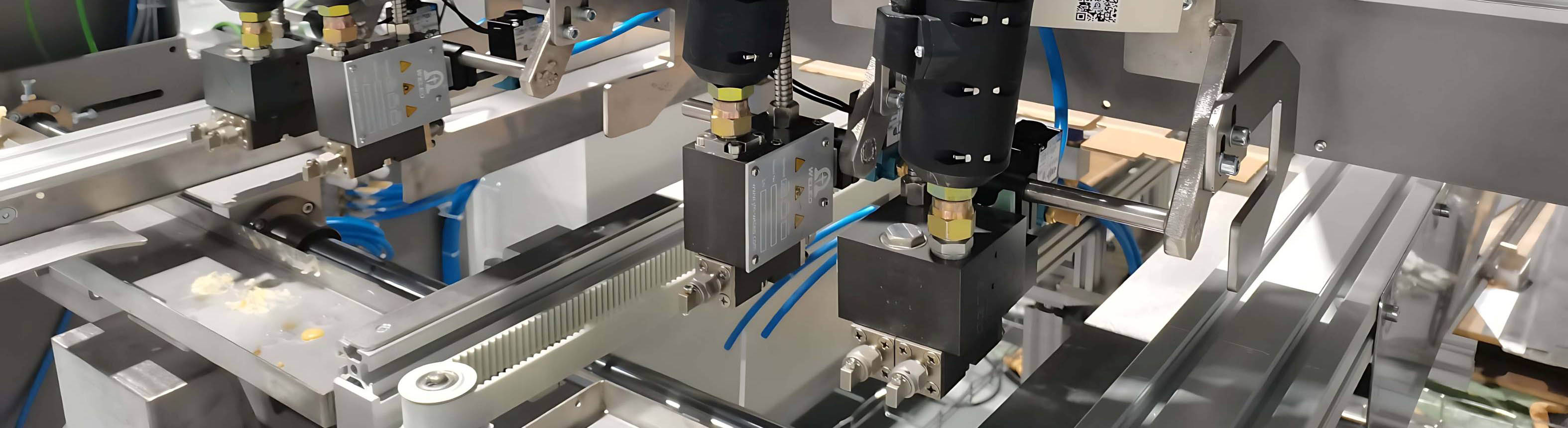
What Is An Industrial Adhesive Pump System?
An industrial adhesive pump system moves adhesive from the supply unit to the application point with controlled pressure, flow, and timing. It may look like only one part of a glue machine, but the pump system directly affects glue amount, bead stability, spray pattern, overflow control, and bonding repeatability.
Table of Contents
- The Pump System Is The Heart Of Glue Delivery
- What Does The Pump Actually Control?
- Main Pump Types Used In Adhesive Systems
- Why Viscosity Changes Pump Performance
- Filtration Protects The Pump
- Pump Stability And Production Efficiency
- How WELEO Supports Adhesive Pump Systems
- What Buyers Should Confirm Before Pump Selection
The Pump System Is The Heart Of Glue Delivery
Every adhesive system needs a stable delivery path. The adhesive is melted or prepared, then the pump pushes it through filters, hoses, manifolds, applicators, and nozzles. If the pump output is unstable, the final glue pattern will not stay consistent.
A glue pumping system industrial setup normally includes:
Pump body
Motor or pneumatic drive
Pressure control device
Filter structure
Heated or non-heated delivery path
Hose connection
Applicator connection
Safety and monitoring parts
The pump does not work alone. It must cooperate with heating, filtration, control signals, and nozzle design.
What Does The Pump Actually Control?
The industrial adhesive pump function is not only pushing glue forward. It controls how steadily adhesive reaches the applicator. Stable pump output helps the nozzle open with the same flow each time.
When pump control is poor, several problems may appear:
Heavy glue at the start of application
Broken glue line during machine acceleration
Uneven spray width
Glue overflow after product pressing
Weak bonding on some products
Frequent pressure adjustment by operators
For automated lines, these small variations can become serious because the machine repeats the same motion thousands of times per hour.
Main Pump Types Used In Adhesive Systems
Different pump structures fit different production needs.
| Pump Type | Typical Strength | Suitable Use |
|---|---|---|
| Gear pump | Stable metering | Accurate hot melt output |
| Piston pump | Strong pushing force | General glue transfer |
| Pneumatic pump | Simple drive structure | Medium-demand delivery |
| Servo metering pump | Precise control | High-accuracy dispensing |
Gear pumps are often selected for stable output because the adhesive flow follows gear rotation. This is useful when production requires repeatable glue amount. Piston pumps can provide strong pressure, but pulsation needs attention in precision dispensing.
The right pump depends on adhesive viscosity, glue consumption, production rhythm, nozzle structure, and accuracy requirement.
Why Viscosity Changes Pump Performance
Adhesive viscosity has a direct effect on pump load. Hot melt adhesive becomes thinner at higher temperature and thicker when temperature drops. Testing methods such as ASTM D3236 are commonly used to measure hot melt viscosity under controlled temperature conditions.
When viscosity is too high, the pump may need more pressure to deliver glue. This can increase mechanical load and reduce output stability. When viscosity is too low, glue may flow too quickly and create overflow.
This is why the pump system must be selected together with temperature control. A good pump cannot solve unstable viscosity caused by poor heating.
Filtration Protects The Pump
Adhesive systems often face contamination from carbonized glue, dust, unmelted particles, or old adhesive residue. These particles can damage pump parts or block the nozzle.
Filters protect the pump and downstream components. However, filters also need regular inspection. A blocked filter may cause pressure rise before the filter and pressure drop after it. The operator may see weak glue output and think the pump has failed, while the real problem is filtration resistance.
A practical maintenance routine should include:
Checking pressure before and after the filter
Replacing filter elements on schedule
Cleaning tank residue
Avoiding dust during adhesive refilling
Watching glue color changes
Recording abnormal pump noise
Pump Stability And Production Efficiency
A stable industrial adhesive pump system improves production efficiency because operators spend less time adjusting pressure and cleaning overflow. Glue application becomes easier to repeat across different shifts.
For carton sealing, hygiene product assembly, labeling, filter manufacturing, furniture components, and other applications, stable flow helps reduce rejected products. It also helps factories use adhesive more efficiently because the system can apply the required amount without excessive safety margin.
How WELEO Supports Adhesive Pump Systems
WELEO provides hot melt adhesive systems, PUR reactive hot melt equipment, cold glue dispensing systems, Heated Hoses, nozzles, filters, and related glue application parts. In a complete system, the pump can be matched with adhesive type, output demand, temperature zones, and nozzle pattern.
For a hot melt line, the pump should work with stable heating and clean filtration. For PUR systems, sealing and temperature management are more important. For cold glue systems, pump compatibility with viscosity and cleaning method should be reviewed.
What Buyers Should Confirm Before Pump Selection
A practical pump selection process should not begin with pump power alone. The factory should confirm adhesive type, working viscosity, application amount, number of glue points, working temperature, line speed, output pattern, and maintenance access.
A well-matched pump system gives the adhesive flow a stable foundation. Once the pump, heating path, filter, hose, and nozzle work together, glue delivery becomes more predictable and the production line becomes easier to control.