





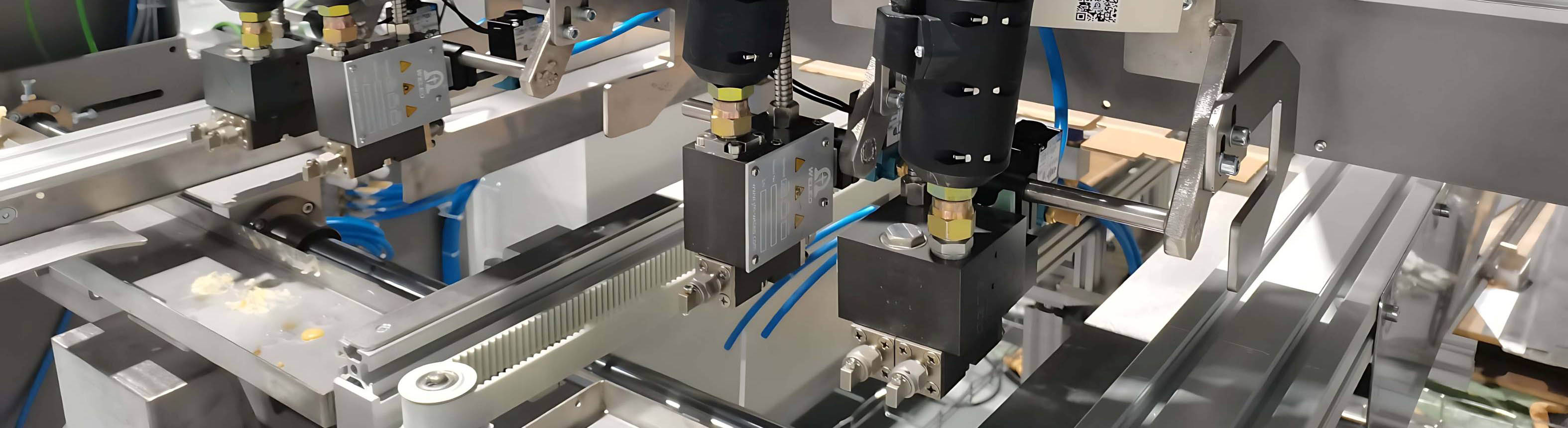
How To Choose Adhesive Dispensing Equipment?
Reliable adhesive dispensing equipment selection starts with one question: what problem must the glue system solve on the production line? Some factories need faster packaging output, some need cleaner edge bonding, some need stable PUR application, and some need a flexible glue system for different product sizes. The correct machine is not only about tank capacity or price. It should match adhesive type, line speed, glue pattern, temperature range, pump structure, maintenance habit, and future production expansion.
Table of Contents
Start With Production Rhythm
Before checking machine models, the production rhythm should be clear.
Is the line continuous or intermittent?
Does the product move at a fixed speed?
How many glue points are needed?
Will the operator change product size every day?
Does the adhesive need bead, spray, dot, spiral, or coating application?
These details decide the whole system structure. A simple carton line may only need a stable hot melt unit, Heated Hose, applicator, and nozzle. A multi-station assembly line may need several output channels, independent temperature zones, and more accurate signal control.
For high-speed production, response time matters. If the applicator opens late or closes slowly, the glue may shift away from the bonding area. On fast packaging or labeling lines, even a small delay can create visible glue position errors.
Match Adhesive Type With Machine Structure
Different adhesives need different equipment support. EVA hot melt is widely used in packaging and general assembly. PUR hot melt needs better sealing and temperature control because it reacts with moisture after application. Cold glue is often used for paper, carton, and porous materials where heating is not required.
The glue system buying guide should always compare adhesive behavior with machine capability.
| Adhesive Type | Equipment Focus | Common Application Concern |
|---|---|---|
| EVA hot melt | Stable melting and flow control | Avoid carbonization and stringing |
| PUR hot melt | Sealed melting and accurate heating | Control moisture exposure |
| Cold glue | Pump stability and clean delivery | Avoid blockage and uneven flow |
| Pressure-sensitive hot melt | Consistent viscosity and output | Keep coating or bead uniform |
Hot melt adhesives are commonly processed within a working range around 120°C to 180°C depending on formulation. PUR systems often require more careful temperature management to avoid premature reaction or bonding instability. These operating differences affect melter design, hose selection, nozzle choice, and cleaning method.
Do Not Select Only By Tank Size
Large tank capacity may look attractive, but bigger is not always better. If adhesive stays heated for too long, degradation and carbon buildup may increase. If the tank is too small, the system may not recover heat fast enough during continuous production.
The better method is to estimate actual adhesive consumption per hour. Then select equipment with enough melting capacity and recovery ability for normal production speed.
A practical review should include:
Glue amount per product
Products per minute
Number of applicators
Production hours per shift
Adhesive refill method
Expected future speed upgrade
This helps prevent both undersized and oversized equipment.
Pump And Pressure Control Are Key
The pump decides whether adhesive delivery is stable. Gear pumps are often used where metering accuracy is important. Piston pumps may be suitable for stronger delivery needs, but pressure fluctuation should be considered.
For adhesive dispensing equipment selection, pressure stability is more important than simply high pressure. Unstable pressure may cause heavy glue at the start point, thin glue in the middle, or overflow after pressing.
The system should allow operators to monitor pressure, adjust output, and maintain filters easily. When pressure changes unexpectedly, the production team should be able to check whether the issue comes from pump wear, filter blockage, adhesive viscosity, or temperature change.
Nozzle Selection Changes The Final Result
The nozzle turns system performance into visible glue application. A wrong nozzle can create overflow, tailing, clogging, or weak bonding. For narrow glue lines, a fine bead nozzle may be better. For wider material coverage, spray or coating structures may be needed.
Nozzle choice should consider product width, material surface, glue viscosity, production speed, and cleaning frequency. A very small nozzle may improve control but clog more easily. A larger nozzle may reduce clogging but increase adhesive waste.
What WELEO Can Support
WELEO provides Hot Melt Adhesive Supply Units, PUR reactive hot melt equipment, cold glue dispensing systems, heated hoses, nozzles, filters, and related adhesive application parts. This makes it easier to build a complete system around actual production needs rather than selecting one isolated machine.
For factories comparing how to choose glue machine options, the focus should be on stable heating, accurate pumping, clean filtration, suitable application heads, and maintenance access. These details directly affect long-term production cost.
A More Practical Way To Confirm The Equipment
Before confirming the order, provide sample material, glue type, line speed, bonding position, working voltage, installation space, and expected glue pattern. Trial testing is valuable because it shows whether the adhesive wets the surface correctly and whether the system remains stable during continuous running.
Good adhesive dispensing equipment should reduce manual adjustment, control glue waste, improve bonding consistency, and make maintenance easier. When the machine is selected around real production data, the adhesive equipment selection guide becomes a practical production decision rather than a simple product comparison.