





What Affects Adhesive Curing Performance?
Reliable curing is not decided by the adhesive alone. It is the result of material selection, temperature control, dispensing accuracy, substrate condition, pressure, open time, and production environment working together. For manufacturers using hot melt or PUR reactive adhesive, small changes in these factors can create visible quality differences such as weak bonding, stringing, skipped glue lines, delayed strength, or unstable appearance.
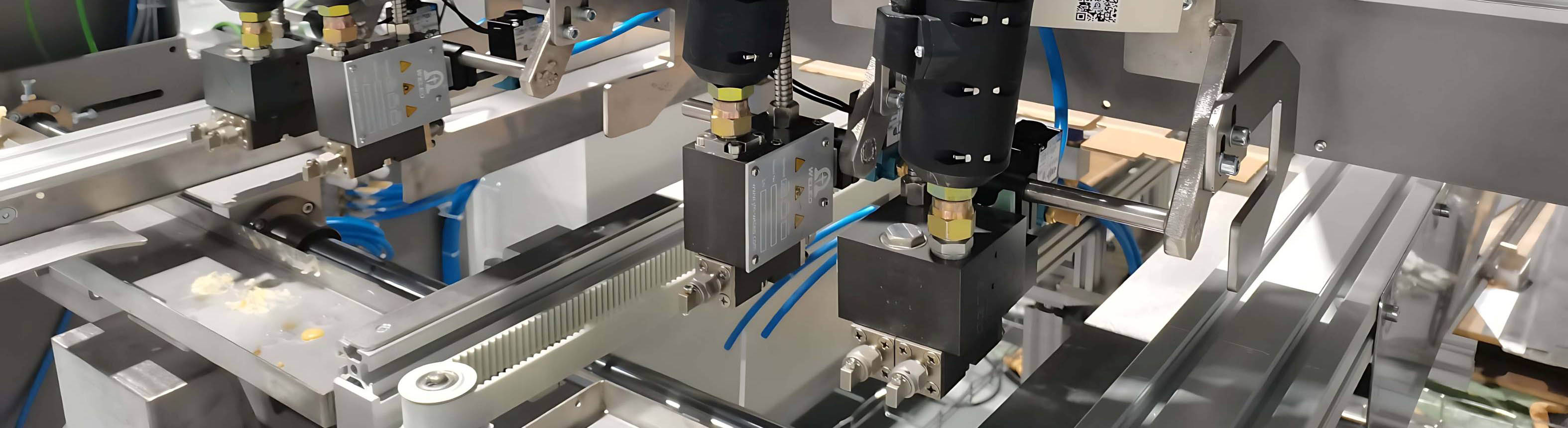
WELEO focuses on hot melt adhesive equipment, PUR Reactive Hot Melt Adhesive Units, cold gluing pump dispensing systems, Heated Hoses, applicators, nozzles, and automatic filling systems. These equipment categories are closely related to adhesive curing performance control, because curing quality begins before the glue reaches the bonding surface. WELEO’s website also lists applications across packaging, paper products, labels, new energy, atomizer assembly, non-woven fabrics, furniture, electronics, and automation industries.
Table of Contents
Temperature Stability Controls Viscosity
Temperature is one of the most direct factors affecting curing performance. Hot melt adhesive must be heated to a stable molten state before application. When the temperature is too low, the adhesive may not wet the substrate properly. When the temperature is too high, the glue may oxidize, char, lose viscosity stability, or produce poor bond quality.
ASTM D4499 explains that hot melt adhesives are generally applied at high temperatures so viscosity becomes low enough for equipment handling, while heat exposure can change adhesive properties and affect bond quality. ASTM D3236 also covers apparent viscosity testing for hot melt adhesives up to 175°C, showing how closely viscosity is linked with process control.
| Control Factor | Poor Control Result | Better Production Action |
|---|---|---|
| Tank temperature | Uneven melting or adhesive aging | Set stable heating range |
| Hose temperature | Flow loss before application | Use full-path heating control |
| Gun temperature | Stringing or unstable spray | Match gun setting with glue type |
| Nozzle condition | Skips or blocked glue line | Clean and inspect regularly |
Curing Depends On The Adhesive Type
Standard hot melt adhesives mainly form strength through cooling and solidification. PUR reactive adhesives are different. They gain initial handling strength after cooling, then continue reacting with ambient moisture to build stronger final bonding. WELEO describes PUR hot melt systems as equipment for polyurethane reactive adhesives that cure in two stages: fast initial set after cooling, followed by a moisture reaction that improves final strength.
This is why a hot melt adhesive reaction system must protect the adhesive from unwanted moisture before application while still allowing proper curing after bonding. For PUR use, sealed feeding, controlled melting, stable delivery, and accurate application are all important.
Dispensing Accuracy Affects Final Bond Strength
Many glue curing issues start from unstable glue amount. Even when the adhesive formula is suitable, curing may fail if the glue line is too thin, too thick, interrupted, or applied in the wrong pattern. Excess adhesive can slow cooling and create waste. Insufficient adhesive may reduce contact area and lead to weak bonding after aging or stress testing.
WELEO notes that pump behavior, temperature management, valves, and nozzles are common sources of glue amount errors. A dispensing system needs stable pressure, repeatable output, and clean nozzle performance because small inconsistencies may repeat thousands of times during one shift.
Substrate Condition Cannot Be Ignored
Curing performance is also affected by the bonding surface. Dust, oil, moisture imbalance, low surface energy, uneven coating, and unstable material temperature can reduce wetting. For packaging, label, woodworking, and assembly applications, the adhesive must contact the surface before open time is lost.
To improve adhesive curing quality, manufacturers should check substrate cleanliness, surface flatness, material temperature, compression pressure, and line speed together. Changing only the glue temperature may not solve the problem if the bonding surface is already contaminated or too cold.
Production Environment Changes Curing Speed
For PUR reactive hot melt adhesives, humidity and temperature affect the moisture reaction. Too little moisture may slow final strength development. Too much uncontrolled exposure before application can shorten pot life and cause equipment problems. A study on moisture-curing hot melt polyurethane describes curing as a diffusion and reaction process, where moisture moves into the adhesive and then reacts inside the adhesive layer.
This means production teams need to control glue curing process from storage to feeding, melting, dispensing, bonding, compression, and post-bond conditioning. Stable operation is more reliable than frequent parameter changes.
How WELEO Supports More Stable Curing
WELEO’s value is not only in supplying single machines, but in matching adhesive equipment with real production conditions. Gear pump melters, piston pump melters, PUR reactive units, heated hoses, spraying systems, slot die applicators, bead applicators, nozzles, and Filter Cartridges can be selected according to viscosity, glue amount, line speed, bonding pattern, and application environment.
For production lines that require stable bonding, the key is not simply using more adhesive. The better method is to build a controlled adhesive application system with accurate heating, steady metering, clean dispensing, suitable nozzle design, and regular maintenance. WELEO supports this approach through equipment configuration, application matching, and practical process support.
Conclusion
Adhesive curing performance is affected by temperature, viscosity, glue amount, substrate condition, humidity, pressure, open time, and equipment stability. A well-designed adhesive system helps reduce weak bonding, excess glue, rework, and unstable appearance. WELEO provides hot melt and PUR adhesive equipment solutions that help manufacturers build more consistent bonding performance across demanding production lines.