





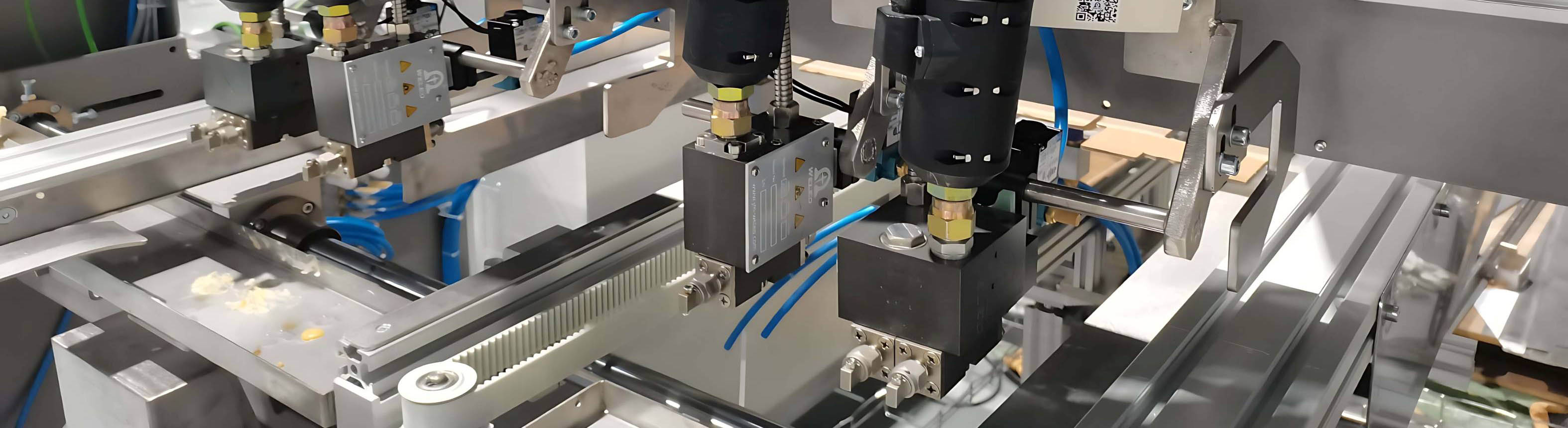
How To Reduce Adhesive Waste In Production?
Adhesive consumption is an important factor that influences manufacturing efficiency and operating costs. In many production processes, excessive glue usage does not always improve bonding performance. Instead, uncontrolled adhesive application can increase material expenses, create cleaning problems, and affect final product appearance.
Reducing adhesive waste requires more than simply using less glue. The production process needs accurate control over adhesive storage, melting, transfer, and application. An adhesive dispensing system helps manufacturers manage these factors by delivering the required amount of adhesive at the correct position and time.
Table of Contents
- Where Does Adhesive Waste Usually Come From?
- How Does Over-Application Increase Production Costs?
- How Can A Dispensing System Control Adhesive Usage?
- Why Does Equipment Matching Affect Adhesive Efficiency?
- Can Process Optimization Reduce Hidden Adhesive Loss?
- What Is The Best Way To Improve Adhesive Utilization?
Where Does Adhesive Waste Usually Come From?
Adhesive waste can occur at different stages of production. Some waste is caused by equipment conditions, while other waste comes from unsuitable application methods.
Common situations include excessive glue output, unstable dispensing patterns, adhesive leakage, and incorrect application settings. These problems may appear small during a single production cycle, but they can create significant material losses during continuous operation.
Understanding where waste occurs allows manufacturers to improve the process instead of only reducing adhesive usage.
How Does Over-Application Increase Production Costs?
Many manufacturers assume that applying more adhesive creates stronger bonding. However, bonding performance depends on the correct amount of adhesive combined with suitable application conditions.
Too much adhesive may create several problems:
Increased material consumption
Longer cleaning time
Uneven product surfaces
Additional processing requirements
A controlled dispensing process ensures adhesive is used according to actual bonding needs rather than relying on excessive application.
How Can A Dispensing System Control Adhesive Usage?
A modern dispensing system improves adhesive efficiency by controlling key application parameters. The equipment can regulate flow rate, pressure, and dispensing timing to maintain consistent output.
The relationship between adhesive volume and production requirements becomes easier to manage:
| Production Factor | Waste Reduction Method |
|---|---|
| Glue Volume | Accurate dispensing settings |
| Application Position | Controlled nozzle movement |
| Flow Stability | Consistent pressure management |
| Production Timing | Synchronized adhesive delivery |
When these factors are properly controlled, manufacturers can reduce unnecessary adhesive consumption while maintaining bonding quality.
Why Does Equipment Matching Affect Adhesive Efficiency?
The adhesive system needs to match the production application. A dispensing system designed for one type of product may not perform efficiently in another manufacturing environment.
Factors such as adhesive viscosity, production speed, material surface, and application pattern all influence equipment performance.
For example, a system with insufficient control accuracy may release more adhesive than required, while an unsuitable nozzle may create uneven glue distribution.
Can Process Optimization Reduce Hidden Adhesive Loss?
Not all adhesive waste is visible. Some losses occur because of unstable operation, frequent adjustments, or poor equipment management.
Optimizing the complete adhesive process can reduce these hidden costs. Stable heating conditions, proper component selection, and regular equipment checks help maintain consistent performance.
An adhesive saving equipment supplier can provide solutions based on actual production requirements and help manufacturers identify areas where adhesive usage can be improved.
What Is The Best Way To Improve Adhesive Utilization?
The goal of reducing adhesive waste is not to minimize glue usage at any cost. The objective is to achieve the correct balance between material consumption and bonding performance.
A well-designed dispensing process allows manufacturers to use adhesive more efficiently, reduce unnecessary waste, and maintain stable product quality. Through accurate control and proper equipment configuration, adhesive becomes a controlled production resource rather than an unpredictable expense.