





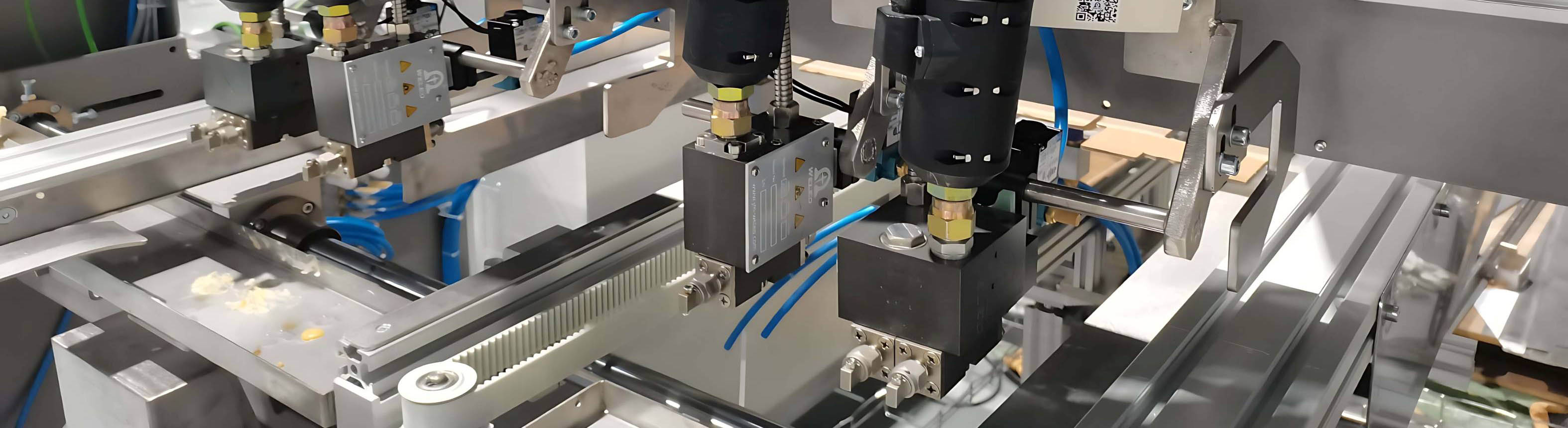
Why Do Manufacturers Upgrade Glue Systems
Production requirements rarely remain unchanged. As factories increase output, introduce new products, or improve quality standards, the original adhesive process may no longer provide enough stability. Many manufacturers upgrade their glue systems because adhesive application has become a key factor affecting production efficiency and product consistency.
An Adhesive Automation System is often introduced when existing equipment cannot fully support modern manufacturing requirements. The upgrade may involve improving temperature management, increasing dispensing accuracy, connecting with automated machinery, or replacing outdated components.
The purpose of upgrading is not only to obtain newer equipment but to solve specific production limitations.
Table of Contents
Signs That A Glue System Requires Improvement
A glue system usually shows clear signals before an upgrade becomes necessary.
For example, production teams may notice that adhesive output changes between batches, operators need frequent manual adjustments, or maintenance periods become shorter. These problems can increase operating costs and create uncertainty in production scheduling.
Another common situation is production expansion. A system designed for lower output may struggle when production speed increases. The equipment may still operate, but it may not provide the same level of stability required for larger manufacturing demands.
Three Main Directions Of Glue System Upgrades
Improving Process Stability
Many upgrades focus on creating more stable adhesive conditions. Temperature control, pressure regulation, and adhesive flow management can be improved to reduce variations during operation.
Stable adhesive performance is especially important for factories running long production cycles because small inconsistencies can accumulate into larger quality problems.
Increasing Production Compatibility
Manufacturing lines often change over time. New machines, new products, or different materials may require adjustments to the adhesive process.
An upgraded system can provide better compatibility with automated production equipment and allow adhesive application to follow updated manufacturing requirements.
Enhancing Operational Management
Modern glue systems often include improved control functions that make operation easier. Operators can monitor important parameters and adjust settings more efficiently.
This reduces dependence on manual experience and allows production teams to manage adhesive application with clearer process standards.
How Upgrade Decisions Affect Long-Term Efficiency?
The value of an upgrade should be measured by the improvement it creates during daily production rather than only the equipment cost.
| Before Upgrade | After Process Improvement |
|---|---|
| Frequent manual adjustment | More stable automatic control |
| Variable glue output | More consistent dispensing |
| Higher adhesive waste risk | Better material utilization |
| Limited production flexibility | Easier system adjustment |
A suitable upgrade can help manufacturers improve efficiency while reducing problems caused by unstable adhesive application.
What Should Be Considered Before Replacing Or Upgrading Equipment?
A complete evaluation should be carried out before making changes. Replacing equipment without understanding the actual production issue may not achieve the expected improvement.
Important factors include current machine condition, adhesive consumption, production speed, future capacity requirements, and compatibility with existing equipment.
A factory automation equipment supplier can provide technical suggestions based on production conditions, but the final system design should always focus on solving real manufacturing challenges.
Why Is Glue System Upgrading Becoming More Common?
As manufacturing moves toward higher efficiency and better quality control, adhesive processes are becoming more closely connected with automation. Glue application is no longer an isolated operation but part of the complete production workflow.
Upgrading a glue system allows manufacturers to improve control, reduce unnecessary variation, and prepare production lines for future requirements. A well-planned upgrade creates a more stable adhesive process and supports continuous improvement in manufacturing operations.