





Guide to Pneumatic Dispensing Applicators for Industry
In modern manufacturing, pneumatic dispensing applicators play a crucial role in controlling the precise application of adhesives, sealants, lubricants, and other viscous materials. These devices use compressed air to regulate flow pressure and ensure consistent material output, making them ideal for packaging, labeling, electronics, nonwoven fabrics, and automotive production lines.
This guide explains how pneumatic applicators work, their main components, advantages, and how they improve efficiency across various industrial processes.
Table of Contents
What Is a Pneumatic Dispensing Applicator
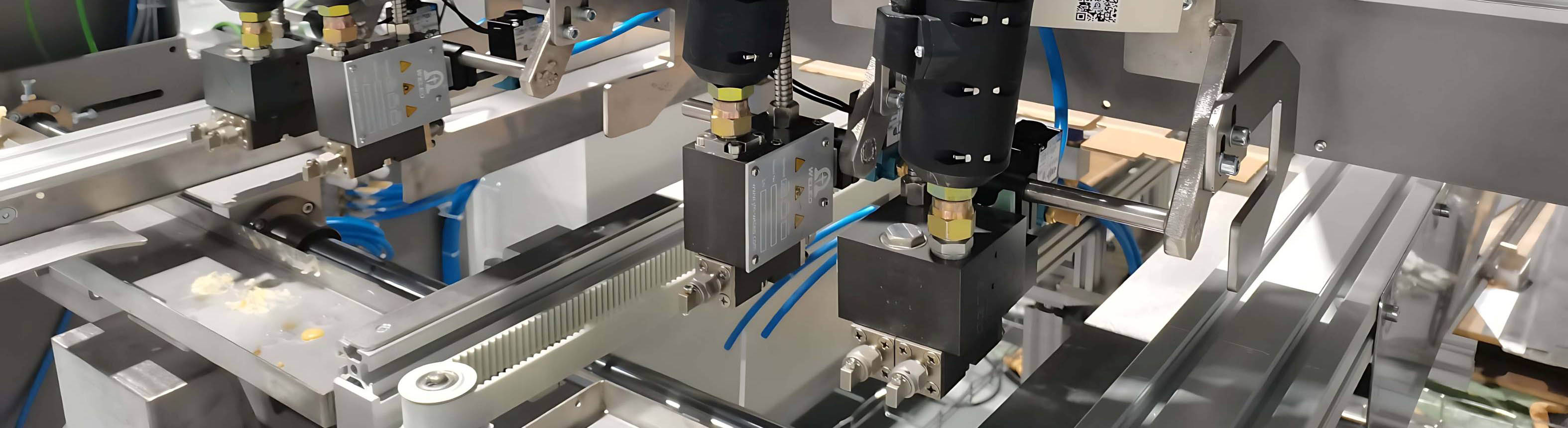
A pneumatic dispensing applicator is a device that applies adhesive or fluid materials by using compressed air to pressurize and control their flow. The system typically includes a pressure tank, air regulator, dispensing valve, and Nozzle, all coordinated to achieve accurate material delivery.
| Component | Function |
|---|---|
| Pressure Tank | Stores adhesive or fluid material under air pressure |
| Air Regulator | Adjusts airflow for precise pressure control |
| Dispensing Valve | Opens or closes to release material accurately |
| Nozzle or Gun | Applies material onto the target surface |
| Controller | Synchronizes air and valve timing for consistency |
Pneumatic applicators are compatible with liquid adhesives, hot melt materials (when heated), and cold glues, making them versatile tools in both manual and automated systems.
How It Works
Material Loading and Pressurization The adhesive or fluid is placed into a pressure tank. Compressed air is applied to the top of the tank, pushing the material downwards through a Hose to the dispensing valve.
Air-Regulated Flow Control An air regulator adjusts the pressure level, allowing precise control of flow rate and output volume. Higher pressure increases delivery speed, while lower pressure supports delicate applications.
Valve Operation A pneumatic dispensing valve opens and closes based on air signal timing from a controller or foot pedal. This ensures consistent, repeatable application without dripping or clogging.
Nozzle Application The adhesive is applied through a nozzle in patterns such as dots, beads, or sprays. The process can be automated by connecting the applicator to a PLC or robotic arm for synchronized operation.
Key Advantages of Pneumatic Dispensing Applicators
1. Precise and Repeatable Control
Pneumatic applicators provide stable pressure control, ensuring consistent adhesive output every cycle. This repeatability is essential in high-speed production lines where precision determines product quality.
2. Versatile Material Compatibility
They can handle a wide range of materials, including PVA glue, epoxy, silicone, hot melt, and UV-curable adhesives. This makes pneumatic applicators useful across multiple industries with diverse bonding needs.
3. Reduced Material Waste
By controlling flow precisely and preventing dripping, pneumatic applicators minimize adhesive waste. Controlled start/stop timing also ensures that no excess material is left on the surface, maintaining clean production lines.
4. Easy Integration with Automation
Pneumatic applicators can easily integrate with PLC systems, sensors, or conveyor-based machinery, enabling synchronized, automated adhesive application. This automation boosts productivity and ensures consistent coating or bonding results.
5. Safe and Low Maintenance Operation
These systems operate at moderate air pressures and do not require complex electrical components, making them safer and easier to maintain than high-voltage or hydraulic systems. Periodic cleaning is usually sufficient to keep them running efficiently.
Applications in Modern Industry
Pneumatic dispensing applicators are used in a variety of manufacturing sectors due to their flexibility and precision:
Packaging Industry: For box sealing, tray gluing, and carton forming.
Labeling and Printing: Ensures accurate glue dots and lines for labels and paper bonding.
Nonwoven Fabrics: Used for spray coating and bonding hygiene products.
Electronics Assembly: Dispenses controlled micro-beads of adhesive for circuit boards.
Automotive Manufacturing: Applies sealants, foams, and adhesives for interior and exterior parts.
Their adjustable air pressure and wide material compatibility make them suitable for both continuous and intermittent production.
Comparison: Pneumatic vs. Electric Dispensing Applicators
| Feature | Pneumatic Applicator | Electric Applicator |
|---|---|---|
| Control Source | Compressed air | Motorized system |
| Pressure Range | Moderate to high | Low to moderate |
| Response Time | Fast | Very precise but slower |
| Ideal For | High-speed industrial lines | Precision micro-dispensing |
| Maintenance | Simple | Requires electronic calibration |
| Energy Use | Low | Moderate |
While electric systems offer higher precision in small-scale assembly, pneumatic applicators dominate in large-scale industrial production where durability and speed are more important.
Operation Tips for Better Performance
Maintain clean, dry air supply to avoid moisture contamination.
Regularly inspect hoses and seals for wear or leaks.
Adjust air pressure based on adhesive viscosity for optimal control.
Use appropriate nozzles for different adhesive types and pattern widths.
Periodically clean dispensing valves to prevent clogging.
Following these steps ensures consistent performance and long service life for pneumatic applicators.
Conclusion
A pneumatic dispensing applicator is a dependable and efficient tool for industrial adhesive and coating applications. With precise pressure control, broad material compatibility, and automation readiness, it supports manufacturers in achieving consistent quality and reduced waste across multiple industries.
For high-performance pneumatic applicators and customized adhesive systems, Weleo offers advanced, durable, and energy-efficient solutions designed to meet the needs of modern packaging, electronics, and automation lines.