





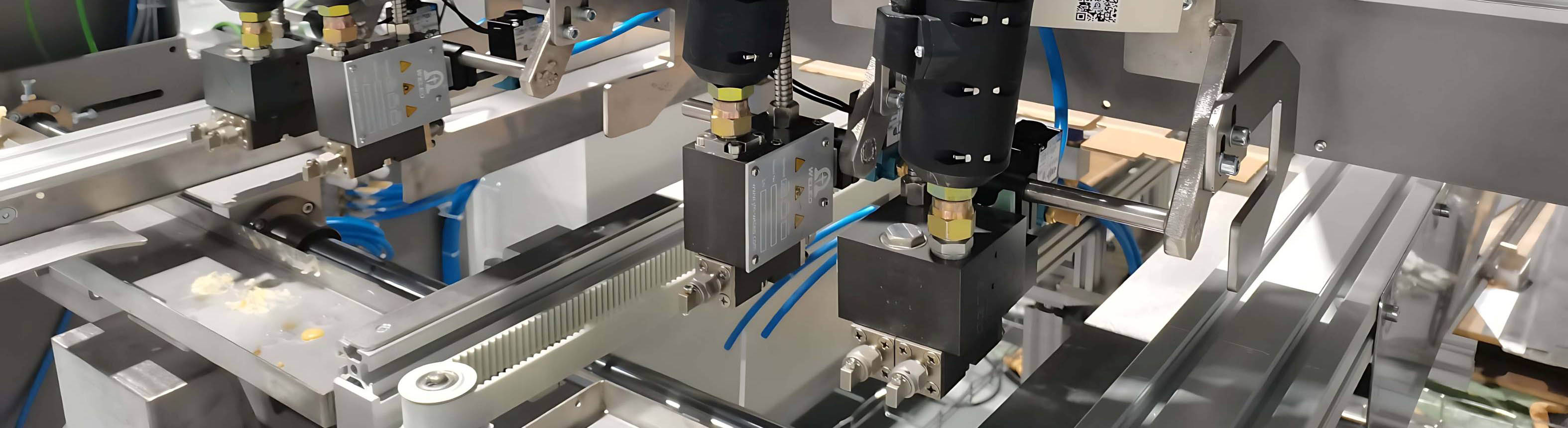
What Affects Glue Dispensing Accuracy?
Reliable dispensing means placing the required adhesive amount in the correct position during every production cycle. Performance can drift after temperature changes, line acceleration, or nozzle contamination, so accuracy must be evaluated across the full delivery path.
Table of Contents
Material Condition Comes First
Viscosity is one of the main glue dispensing accuracy factors because it controls resistance through the tank, pump, hose, filter, and applicator. Adhesive that becomes too fluid may create an oversized bead or continue flowing after shut-off. Material that becomes too thick may cause delayed starts, low output, pressure rise, and incomplete coverage.
ASTM D1084 provides recognized methods for measuring the viscosity of free-flowing adhesives. Method B covers 0.05 to 200 Pa·s, equal to 50 to 200,000 cP, for suitable Newtonian or near-Newtonian materials. This range shows why settings should follow measured adhesive properties.
For hot melt production, the tank, pump, hose, gun, and nozzle must remain within the intended thermal range. WELEO notes that heat loss in the delivery path can thicken adhesive and disturb flow stability.
Pump Output Must Match the Process
Pump selection is central to adhesive system precision control. Gear pumps use controlled rotation to provide continuous delivery, while piston pump systems suit other requirements. Capacity should be selected according to viscosity, target glue amount, line speed, and required accuracy rather than tank size alone.
Pressure cannot confirm accuracy by itself. A blocked filter, worn seal, unsuitable hose, or restricted nozzle may raise pressure while deposited adhesive decreases. Timed weight or volume tests provide a clearer measure of output.
Speed Converts Delay into Placement Error
During high-speed industrial glue application, small timing differences become visible position errors.
Position error = line speed × signal delay
At 90 metres per minute, a product moves 1.5 metres each second. A delay of 20 milliseconds shifts the glue position by about 30 millimetres. Sensor response, PLC timing, valve speed, gun distance, and hose pressure must work together.
Calibration Should Reproduce Production
Teams can improve glue dispensing accuracy by testing with the actual adhesive, substrate, temperature, and line speed. Heating zones should first reach stable readings. A timed sample can then be weighed against the target. Bead width, start point, stop point, continuity, and cut-off should be checked over repeated cycles.
| Control Item | Verification Method | Problem Revealed |
|---|---|---|
| Output | Timed weight test | Under-dosing or over-dosing |
| Temperature | Zone readings | Viscosity variation |
| Trigger point | Marked samples | Signal delay |
| Bead shape | Width check | Nozzle instability |
| Repeatability | Cycle comparison | Pump or valve drift |
Maintenance Protects Repeatability
The factors affecting glue precision also include nozzle wear, carbonized adhesive, contaminated filters, trapped air, damaged hoses, unstable signals, and changing substrate position. Maintenance intervals should reflect operating hours, adhesive type, heat exposure, and pressure trends.
WELEO supplies precision gear pump melters, piston pump units, quantitative spraying systems, PUR hot melt equipment, cold glue systems, Heated Hoses, guns, filters, and nozzles. Each setup can be matched to viscosity, output, speed, hose length, pattern, and automation signals.
Accurate dispensing depends on material condition, metering, heating, timing, applicator design, inspection, and maintenance working as one process. Measuring deposited output helps identify drift before it affects bond quality.