





Why Does Adhesive Temperature Affect Performance?
Temperature is one of the easiest settings to adjust in an adhesive system, but it is also one of the easiest settings to misunderstand. Many production problems that look like poor glue quality actually come from unstable heating, delayed heat recovery, or the wrong temperature balance between the tank, hose, and applicator.
For automated packaging, product assembly, filter manufacturing, non-woven processing, labeling, and woodworking lines, the adhesive temperature control system decides how the glue flows, wets the surface, and forms bonding strength after cooling or curing.
A stable temperature is not only about keeping glue hot. It is about keeping adhesive behavior predictable during every production cycle.
Table of Contents
- Temperature Changes Viscosity First
- The Tank, Hose, And Nozzle Should Not Fight Each Other
- What Happens When Adhesive Is Overheated
- Temperature Recovery Matters During Continuous Running
- A Practical Temperature Review For Production Teams
- How WELEO Builds Better Temperature Control
- Better Bonding Starts With A Stable Heating Path
Temperature Changes Viscosity First
Hot melt adhesive is highly sensitive to temperature. When the temperature rises, viscosity decreases and the glue flows faster. When the temperature drops, viscosity increases and the pump needs more force to deliver the same amount.
Industry viscosity testing such as ASTM D3236 is commonly used to evaluate hot melt adhesive viscosity under controlled temperature conditions. This test method shows a simple but important fact: adhesive performance cannot be separated from temperature.
When viscosity is too high, the production line may see:
Broken glue lines
Poor wetting on coated surfaces
Higher pump load
Slow glue recovery
Incomplete bonding at high speed
When viscosity is too low, the line may see:
Glue overflow
Stringing after nozzle closing
Excessive penetration into porous material
Unstable bead shape
Contaminated product edges
This is why hot melt temperature stability should be treated as a process control point, not only as an equipment setting.
The Tank, Hose, And Nozzle Should Not Fight Each Other
Many factories only check the glue tank temperature. This is not enough. After melting, the adhesive still needs to pass through the pump, Heated Hose, manifold, applicator, and nozzle. If one area loses heat, the glue behavior changes before it reaches the product.
A good glue heating system controls multiple zones separately. The tank should melt adhesive without overheating it. The hose should maintain flow stability. The applicator should keep the glue ready for accurate opening and closing.
For example, if the tank is set correctly but the heated hose is too cool, glue may become thicker during transfer. Operators may increase pressure to compensate, but this can create unstable output once the line speed changes. If the nozzle is too hot, the glue may become too thin at the outlet and spread after application.
The correct approach is temperature balance, not simply higher temperature.
What Happens When Adhesive Is Overheated
Overheating is a common hidden problem in hot melt production. A higher setting may seem helpful when glue output is slow, but long-term overheating can damage adhesive performance.
Many hot melt adhesives are processed within a working range around 120°C to 180°C depending on formulation and application. Some PUR hot melt systems require more careful control because reactive adhesive can be affected by both heat and moisture exposure.
When adhesive stays at excessive temperature for too long, several problems may appear:
Carbon buildup inside the tank
Darkened adhesive color
Filter blockage
Nozzle clogging
Odor increase
Lower bonding consistency
Shorter equipment maintenance interval
Carbonization is especially harmful because small particles can travel through the system and disturb glue flow. Once the nozzle or filter becomes partially blocked, dispensing becomes uneven. Operators may think the pump is weak, but the real issue may be degraded adhesive inside the heating path.
Temperature Recovery Matters During Continuous Running
Some systems look stable when idle, but the temperature drops during continuous operation. This happens when adhesive consumption is higher than the heating recovery capacity.
A production line that runs at low speed may not show this issue. After speed increases, the tank needs to melt new adhesive faster, and the hose needs to maintain heat under higher flow. If recovery is weak, glue viscosity rises during operation, causing skipped lines or poor bonding.
This is important for carton sealing, labeling, hygiene product assembly, and other high-output applications. The system should be selected based on actual glue consumption per hour, not only tank volume.
A Practical Temperature Review For Production Teams
Before changing adhesive or replacing parts, the production team should record real operating data. This makes troubleshooting more accurate.
| Review Item | What To Confirm | Why It Matters |
|---|---|---|
| Tank setting | Actual temperature compared with adhesive recommendation | Prevents overheating or poor melting |
| Hose setting | Temperature stability during production | Keeps viscosity stable before application |
| Nozzle setting | Glue behavior at the final outlet | Affects bead shape and stringing |
| Line speed | Adhesive demand per minute | Tests heating recovery capacity |
| Stop time | How long glue stays heated during pauses | Reduces carbonization risk |
A short production test can also compare bonding results at different temperatures. The best setting is not always the highest setting. It is the setting that gives stable flow, clean application, and reliable bonding strength.
How WELEO Builds Better Temperature Control
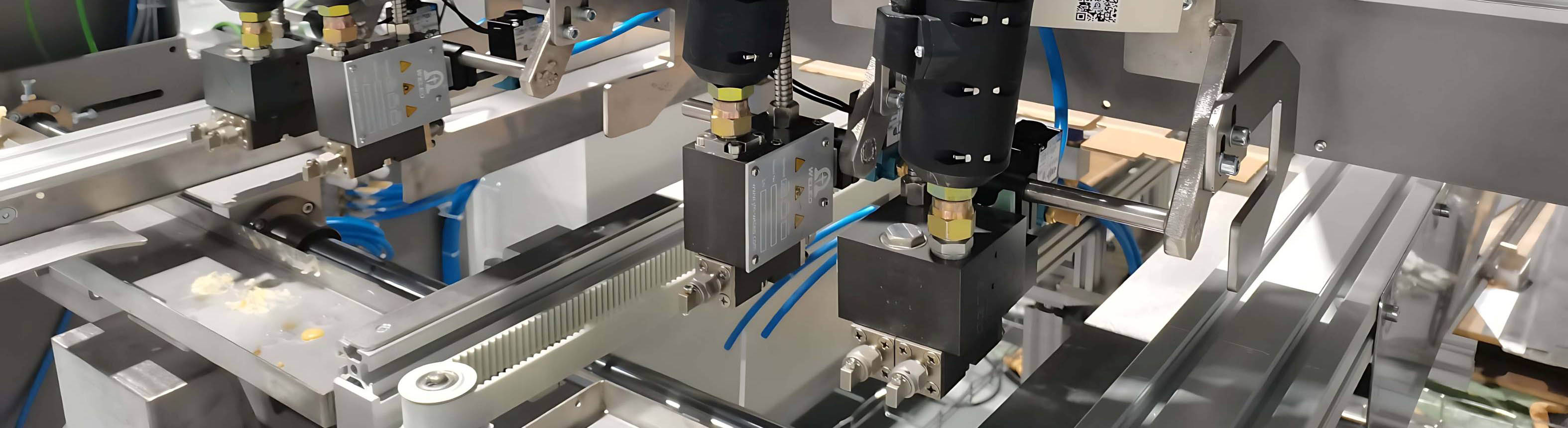
WELEO provides Hot Melt Adhesive Supply Units, PUR reactive hot melt equipment, heated hoses, applicators, nozzles, filters, and cold glue dispensing systems. For adhesive temperature control system planning, this equipment combination allows different heating zones to work together.
A suitable system helps maintain hot melt temperature stability from melting to application. When the heating path is stable, the pump output becomes easier to control, the nozzle pattern becomes cleaner, and glue performance temperature issue troubleshooting becomes less random.
For factories running automated lines, temperature stability reduces repeated manual adjustment. It also helps protect adhesive quality during long production shifts.
Better Bonding Starts With A Stable Heating Path
Adhesive temperature affects viscosity, flow speed, wetting, open time, carbonization, filtration, and final bonding strength. When temperature zones are poorly matched, factories may see glue overflow, weak adhesion, nozzle clogging, or unstable output.
A controlled heating system gives the adhesive a more predictable working condition. Before changing glue brands or increasing glue volume, it is often better to check whether the system can maintain the right temperature from tank to nozzle. Stable temperature control makes adhesive application cleaner, more repeatable, and easier to manage in automated production.