





What Is The Best Adhesive System For Automation?
Stable bonding in an automated production line depends on more than adhesive selection. The real performance comes from how the adhesive is melted, transferred, metered, heated, filtered, and applied during continuous operation. For packaging, labeling, non-woven, electronics, furniture, automotive parts, and assembly lines, the best adhesive system is not simply the largest machine. It is a complete automated adhesive application system that matches line speed, glue type, substrate surface, working temperature, and expected output accuracy.
Table of Contents
Why Automation Needs A Controlled Glue Process
Manual glue application may work for small batches, but automated lines run with fixed cycle times. Once the machine speed increases, small variations become visible problems. A short delay in glue output may create skipped lines. A small temperature drop may increase viscosity. A wrong nozzle angle may cause stringing or overflow.
Industry adhesive testing standards such as ASTM D3236 show that hot melt viscosity is closely linked with temperature control. When viscosity changes, pump pressure and glue volume also change. This is why automation needs a system-level solution rather than only a melter or a single applicator.
A smart glue dispensing system should control several points together:
Melting temperature
Hose temperature
Pump pressure
Nozzle opening time
Glue pattern
Filtration condition
Production signal response
When these factors work together, the glue output becomes repeatable across different shifts and production batches.
Core Parts Of An Automated Adhesive System
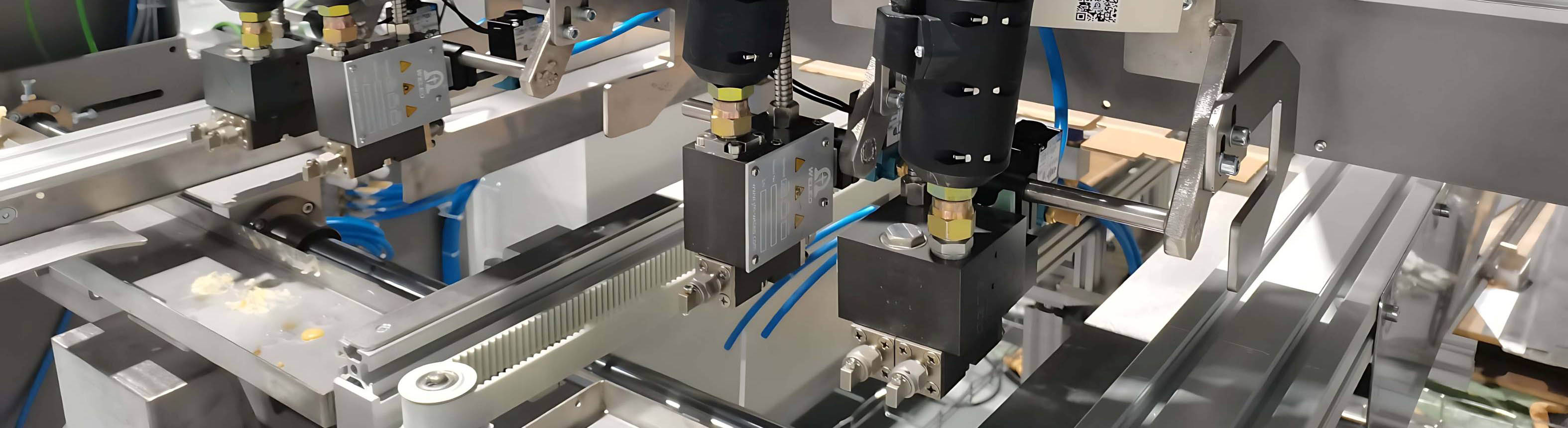
A reliable industrial automation glue setup normally includes a supply unit, pump, Heated Hose, applicator head, nozzle, control module, and filtration components. Each part affects the final bonding result.
| System Part | Main Function | Common Risk When Poorly Matched |
|---|---|---|
| Melter unit | Melts adhesive and stores molten glue | Carbonization, unstable viscosity |
| Pump system | Sends adhesive under pressure | Pulsation, overflow, weak output |
| Heated hose | Maintains glue temperature during transfer | Temperature loss, stringing |
| Applicator head | Controls glue release timing | Skipped glue, tailing |
| Nozzle | Defines bead, spray, dot, or coating pattern | Clogging, uneven glue line |
| Controller | Connects glue output with line signal | Timing error, material waste |
For high-speed production, the automated adhesive application system must respond quickly to machine signals. A slow valve or unstable pressure curve can cause glue to land too early or too late. That delay may look small, but on a fast carton line or labeling line, it can shift the glue position enough to affect sealing quality.
Matching The Adhesive Type To The Equipment
Different adhesives require different system designs. EVA hot melt is often used for packaging and general assembly because it melts quickly and sets after cooling. PUR hot melt needs more careful handling because it reacts with moisture after application. Cold glue systems are used where water-based adhesive bonding is suitable, especially for paper, carton, and porous substrates.
For hot melt, stable heating is the first priority. For PUR, sealing, moisture control, and accurate temperature management are more important. For cold glue, viscosity, pump stability, and clean delivery are key.
Why Precision Matters More Than Maximum Output
Some buyers focus only on tank capacity or pump power. In real production, precision is usually more valuable than oversizing. Too much glue increases cost, creates overflow, contaminates products, and slows cleaning. Too little glue leads to weak bonding and customer complaints.
For many automated lines, the goal is not simply more glue. The goal is the same glue amount at the same position every time. A smart glue dispensing system with stable pressure and accurate timing can reduce adhesive waste while improving product appearance.
In carton sealing, label bonding, and non-woven assembly, even a small change in glue weight can affect both cost and quality. When a line runs thousands of products per hour, a 5% glue saving may become meaningful over long-term production. Stable dispensing also reduces operator adjustment, which helps factories keep output consistent across different shifts.
How WELEO Supports Automated Adhesive Production
WELEO focuses on hot melt adhesive equipment, PUR reactive hot melt units, cold glue dispensing systems, heated hoses, nozzles, filters, and related application components. For automation projects, this product range allows the system to be built around the actual production process instead of forcing one machine to cover every need.
For packaging lines, a gear pump hot melt system may provide stable metering and continuous output. For assembly processes that need stronger bonding, PUR reactive hot melt equipment may be selected. For paper converting or porous material bonding, cold glue dispensing can reduce heat-related process limitations.
The equipment structure should also allow maintenance access. Filters need replacement, hoses need checking, nozzles need cleaning, and temperature zones need inspection. A system that is easy to maintain often performs better over time than one that only looks powerful on paper.
Practical Selection Advice Before Ordering
Before confirming an automated adhesive production solution, buyers should provide sample products, line speed, adhesive type, glue pattern, working voltage, installation space, and expected production rhythm. These details allow the equipment configuration to be matched more accurately.
For a new automation project, testing is especially important. Trial bonding can show whether the glue wets the surface properly, whether the open time is suitable, and whether the nozzle pattern remains stable during continuous running.
A good adhesive system should not make production more complicated. It should reduce unstable bonding, lower glue waste, improve product appearance, and make daily operation easier for the factory team. When the system is selected around real line conditions, automation becomes more predictable and easier to scale.