





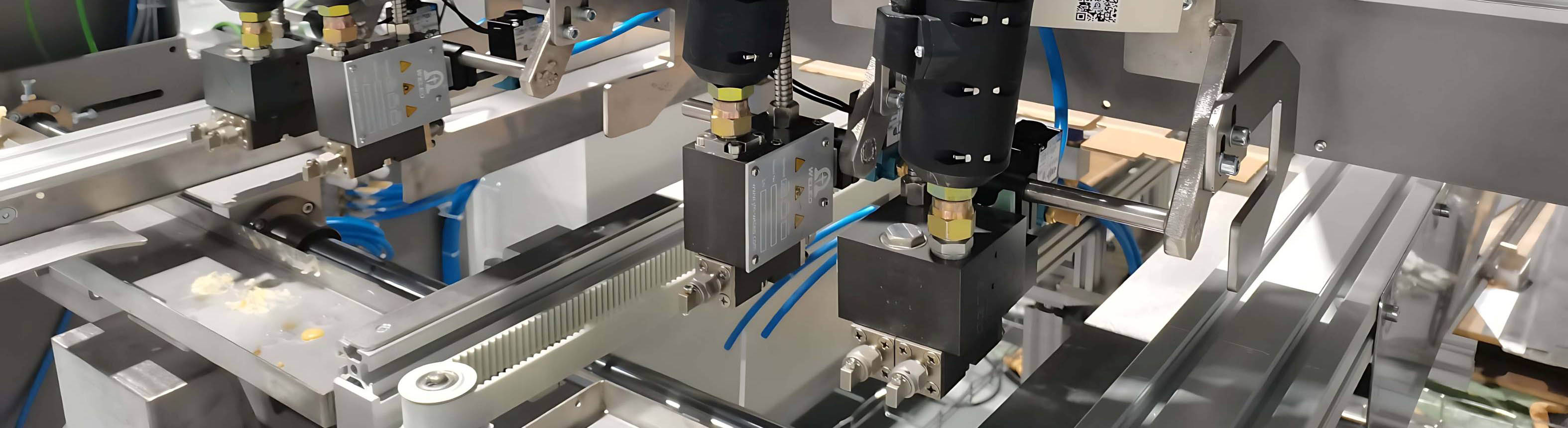
How To Improve Precision in Glue Dispensing?
Precise adhesive application is not only about using a better nozzle. It depends on how the adhesive is melted, filtered, pressurized, transported, metered, triggered, and applied to the product surface. When one part of the system is unstable, the final glue line may shift, break, overflow, or vary in thickness. For packaging, labels, paper products, non-woven materials, electronics, furniture, and automated assembly lines, dispensing precision directly affects bonding strength, material cost, production speed, and finished product appearance.
WELEO focuses on Hot Melt Adhesive Supply Units, PUR Reactive Hot Melt Adhesive Units, cold gluing systems, high-precision gear pump series, quantitative spraying systems, Heated Hoses, hot melt guns, nozzles, and automatic filling solutions. This product range supports manufacturers that need a precision glue dispensing system built around actual adhesive viscosity, line speed, glue amount, bonding pattern, and automation requirements. WELEO’s product information lists its equipment applications across beverage packaging, food packaging, paper products, atomizer assembly, new energy, non-woven fabrics, labels, and automation industries.
Table of Contents
Precision Starts With Stable Adhesive Viscosity
Glue dispensing accuracy begins before the adhesive reaches the nozzle. Hot melt adhesive must be heated into a stable liquid state, while cold glue systems need viscosity adjusted to match the application condition. If viscosity changes during production, the pump may deliver different glue amounts even when the machine setting has not changed.
ASTM D3236 covers apparent viscosity testing for hot melt adhesives and coating materials with apparent viscosities up to 200,000 mPa·s at temperatures up to 175°C. This standard shows why viscosity control is a real production factor. When temperature changes, adhesive flow changes, and the final dispensing result becomes harder to control.
Full-Path Heating Must Be Controlled
A tank temperature setting alone is not enough. The adhesive passes through the tank, pump, heated hose, gun body, and nozzle before reaching the product. WELEO explains that heated hoses keep adhesive at the correct temperature during transfer, and heat loss can thicken the adhesive and affect flow stability. For a high-precision line, each heated section should remain consistent, because one cold zone can create delayed output or uneven glue shape.
Pump Accuracy Determines Output Repeatability
The pump is the core part of glue metering. A piston pump and a gear pump can both support adhesive delivery, but they behave differently under continuous production. WELEO explains that gear pump melters use precision-engineered gears to provide continuous and accurate adhesive flow, while piston-type systems rely on linear motion to push adhesive. This makes pump selection important when the production line requires repeatable metering and stable coating thickness.
For applications that require very consistent output, gear pump control technology helps maintain a smoother flow curve and better glue amount repeatability. WELEO’s technical article on glue amount control states that pump sizing should be based on adhesive viscosity, target output, line speed, and required control accuracy rather than general capacity alone.
Main Factors That Affect Dispensing Precision
| Control Area | Precision Risk | Optimization Method |
|---|---|---|
| Adhesive viscosity | Output changes during operation | Keep tank, hose, gun, and nozzle temperature stable |
| Pump selection | Glue amount fluctuates | Match pump type with viscosity and output demand |
| Nozzle design | Glue line becomes too wide or uneven | Select nozzle size and pattern according to bonding area |
| Filter condition | Flow restriction causes unstable pressure | Replace filters before pressure becomes inconsistent |
| Trigger timing | Glue position shifts on fast lines | Synchronize signal response with product movement |
| Surface condition | Adhesive cannot wet the material evenly | Keep substrate clean, flat, and at suitable temperature |
Nozzle Matching Affects Final Glue Shape
An accurate adhesive system must apply the right glue pattern, not simply the right glue volume. A nozzle that is too large may create excess adhesive and overflow. A nozzle that is too small may increase pressure and produce an incomplete glue line. For spray, bead, slot coating, dot application, or continuous coating, nozzle geometry must match the adhesive type, production speed, product size, and required bonding area.
WELEO’s equipment range includes Hot Melt Gun Applications, packaging nozzle applications, non-woven nozzle applications, heated hoses, filter cartridges, and different adhesive supply units. This allows the dispensing system to be configured according to the real application instead of forcing one structure into different production conditions.
Control Signals Should Match Line Movement
Even when glue flow is stable, dispensing can still be inaccurate if the trigger signal is delayed. On automated lines, the controller must open and close the applicator at the right moment. A small delay can shift the glue position, especially on high-speed packaging, labeling, or assembly lines. To improve glue dispensing precision, the system should combine stable pressure, fast valve response, correct sensor position, and proper timing adjustment.
Maintenance Keeps Precision From Drifting
Dispensing precision often becomes worse over time because of filter blockage, nozzle contamination, adhesive carbonization, worn seals, loose hose joints, or unstable sensor feedback. These problems may not stop the machine immediately, but they gradually change pressure and flow. WELEO notes that precise flow control helps deliver the same amount of adhesive every time, while poor control often produces irregular glue lines or inconsistent coating thickness.
A practical maintenance routine should include tank cleaning, filter replacement, nozzle inspection, hose temperature checking, pressure monitoring, and seal condition review. This is especially important for PUR reactive hot melt systems, because sealed feeding and controlled melting help protect adhesive quality before application.
WELEO’s System Approach To Higher Accuracy
WELEO supports precision improvement through equipment matching rather than single-parameter adjustment. High-precision gear pump series, piston pump series, quantitative spraying systems, PUR reactive hot melt equipment, cold gluing systems, heated hoses, guns, nozzles, and automatic filling units can be selected according to adhesive behavior and line conditions.
A high accuracy adhesive system should keep the adhesive stable from preparation to final application. It should also reduce unnecessary operator adjustment, support repeatable output, and make maintenance easier. With suitable equipment configuration and process control, manufacturers can reduce glue waste, improve product consistency, and maintain more reliable bonding performance.
Conclusion
Glue dispensing precision improves when viscosity, temperature, pump output, nozzle design, trigger timing, substrate condition, and maintenance are managed as one complete process. WELEO helps manufacturers build adhesive application systems that match real production needs, from hot melt and PUR reactive adhesive to cold glue and automated dispensing. Better precision comes from stable equipment, accurate control, and a process designed around the adhesive rather than the machine alone.