





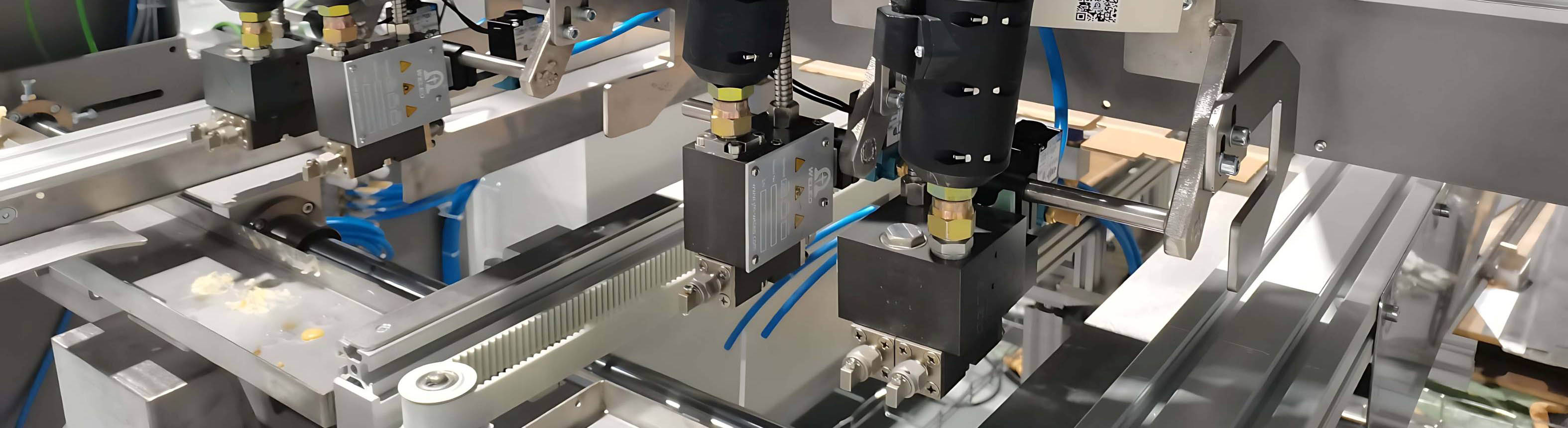
What Makes Non-woven Nozzles Essential for Hygiene Production?
In the nonwoven and hygiene industry, the quality of adhesive application directly affects product softness, bonding strength, and comfort. Non-woven adhesive Nozzles are key components that determine how evenly hot melt adhesive is distributed on fabrics during high-speed production. These nozzles are used in machines that manufacture diapers, sanitary pads, wipes, medical masks, and filtration materials, ensuring precise glue placement with minimal waste.
This article explains how non-woven nozzles work, their structure, and why they are essential in maintaining production efficiency and product quality.
Table of Contents
What Is a Non-woven Adhesive Nozzle
A non-woven nozzle is a precision-engineered component designed to control the adhesive pattern applied to nonwoven materials. It connects to an adhesive melter or pump system and dispenses hot melt adhesive through small, calibrated openings. The nozzle determines the width, density, and distribution of glue on the substrate.
Typical configurations include swirl, slot, and bead nozzles, each serving different production needs such as full-surface coating or targeted line bonding. These nozzles operate under carefully controlled temperature and pressure to maintain consistent adhesive behavior.
| Nozzle Type | Main Function | Common Use |
|---|---|---|
| Swirl Nozzle | Creates spiral adhesive pattern | Soft bonding for diapers and pads |
| Slot Nozzle | Applies uniform layer | Lamination for medical and filtration fabrics |
| Bead Nozzle | Produces linear glue lines | Edge sealing and structure reinforcement |
How Non-woven Nozzles Work
Adhesive Delivery The adhesive is melted in the main melter and pumped to the nozzle through heated Hoses. Pressure—usually between 30 and 70 bar—ensures steady flow.
Temperature Control The nozzle is equipped with a built-in heating element that maintains a constant temperature (typically 150–180°C). This prevents premature solidification and ensures stable spray quality.
Pattern Formation Depending on the nozzle type, the adhesive is expelled as a fine swirl, line, or sheet. In swirl nozzles, compressed air mixes with adhesive flow to form a spiral pattern that provides light yet strong bonding.
Adhesive Application The adhesive bonds fibers together at precise points, ensuring structure integrity without reducing softness. This micro-level bonding is vital for hygiene products that require both durability and comfort.
Key Advantages of Non-woven Nozzles
1. Precision and Consistency
Non-woven nozzles ensure accurate adhesive placement even at production speeds exceeding 500 m/min. Consistent glue distribution prevents defects such as over-bonding or stiff areas, resulting in uniform texture and flexibility.
2. Energy and Material Efficiency
Because the nozzle applies adhesive exactly where needed, it reduces material consumption by up to 30% compared to conventional coating methods. The precise heating control also minimizes energy use during continuous operation.
3. Superior Product Quality
Proper nozzle design ensures soft touch and breathable performance in finished hygiene products. Even glue lines reduce bulk and maintain fabric comfort while ensuring reliable bonding strength.
4. Easy Maintenance and Durability
Modern non-woven nozzles are made from stainless steel or titanium alloys, featuring anti-clog channels and replaceable Filters. This design extends lifespan and allows quick cleaning during product changeovers.
5. Compatibility with Automation Systems
These nozzles integrate with PLC-controlled adhesive systems for synchronized spray timing and pattern adjustment. The automatic control reduces human error and keeps coating performance stable during long production runs.
Applications in the Hygiene Industry
Non-woven nozzles are vital components in a wide range of hygiene-related manufacturing processes:
Baby Diapers: Precise adhesive patterns for core fixation and side bonding.
Sanitary Pads: Uniform coating for softness and structural integrity.
Medical Masks: Stable bonding for multi-layer fabric and elastic attachment.
Wipes and Tissues: Controlled adhesive flow prevents fabric stiffening.
Air and Liquid Filters: Consistent glue distribution ensures pore stability and filtration strength.
Their ability to apply adhesive in delicate, breathable patterns allows nonwoven materials to maintain softness without losing performance.
Why They Are Essential for Hygiene Production
Non-woven nozzles are not just simple spray tips—they are precision control tools that define product quality and production efficiency. In high-speed hygiene manufacturing, even a slight inconsistency in adhesive pattern can lead to waste or defective products. These nozzles balance three critical goals:
Strong bonding without stiffness
Uniform adhesive placement across wide webs
Stable operation under continuous high-speed production
Their optimized internal flow paths and heating structures enable smooth, clog-free performance that keeps production running efficiently for long periods.
Maintenance Recommendations
To maintain optimal nozzle performance:
Use filtered adhesive to prevent clogging.
Regularly clean nozzles with approved flushing agents.
Avoid mechanical impact that may deform precision openings.
Monitor temperature sensors to ensure even heating.
Proper maintenance keeps the nozzle performing consistently, extending its service life and reducing downtime.
Conclusion
A non-woven adhesive nozzle is the heart of precision bonding in hygiene manufacturing. It ensures that adhesives are applied cleanly, evenly, and efficiently—resulting in soft, durable, and high-quality nonwoven products. By combining stable temperature control, material efficiency, and pattern accuracy, these nozzles form the foundation of reliable hygiene production lines.
For advanced nozzle technology and complete hot melt adhesive systems, Weleo provides professional solutions that enhance bonding precision, reduce costs, and improve manufacturing performance across the global nonwoven industry.